How to take a paw print after your pet has died
You can take a paw print after your pet dies, and the gentlest time is within the first two hours, while their paws are still soft. Lay them on their side on a towel, use ink or an inkless kit rather than clay if you can, and bring the card to the paw instead of lifting the leg. If you'd rather not do it yourself, the vet or crematory can take it before cremation.
By the Paw Print Keepsakes & Memorial Impressions editorial team · Updated September 24, 2026 · 4 min read · Sources
- How long you have, and how to keep that time calm
- A step-by-step method that doesn't need strength
- Who can take it for you if you can't
The short answer
Can you take a paw print after a pet dies?
Yes. Many families do, and it's a completely normal thing to want. The first couple of hours are easiest, because the legs and toes are still soft and relaxed. After that the body gradually stiffens for a period, which makes spreading the toes harder, but a print is usually still possible if you're patient or ask for help.
Ink or an inkless kit is gentler than clay at this stage. You don't need to press a heavy paw into anything; you simply bring the card to the paw. If you don't have a kit at home, don't worry. Your vet or crematory can take a print before cremation, as long as you ask. The poll results show when other readers took their pet's print.
When did (or will) you take your pet's print?
Tap an answer to vote and see how others answered. Anonymous.
Timing
How long do you have to take the print?
The simplest guide: soon is easier, but you have more time than it feels like. If your pet died at home, keep them somewhere cool while you gather what you need. Around a third of dogs in one large US study died at home or on the owner's property (32.4%[1]), and 14.7%[2] died at home with no vet involved, so this situation is more common than people realize.
If your pet died at the clinic, ask the team to take the print before your pet is collected. Owners often prefer a short stay: 26.1%[3] in one US survey wanted their pet to leave the hospital within 24 hours. Once your pet has gone to the crematory, a print can still be taken on arrival, but it needs a phone call. Our print window timing guide explains each stage.
Getting ready
What do you need, and how should you prepare?
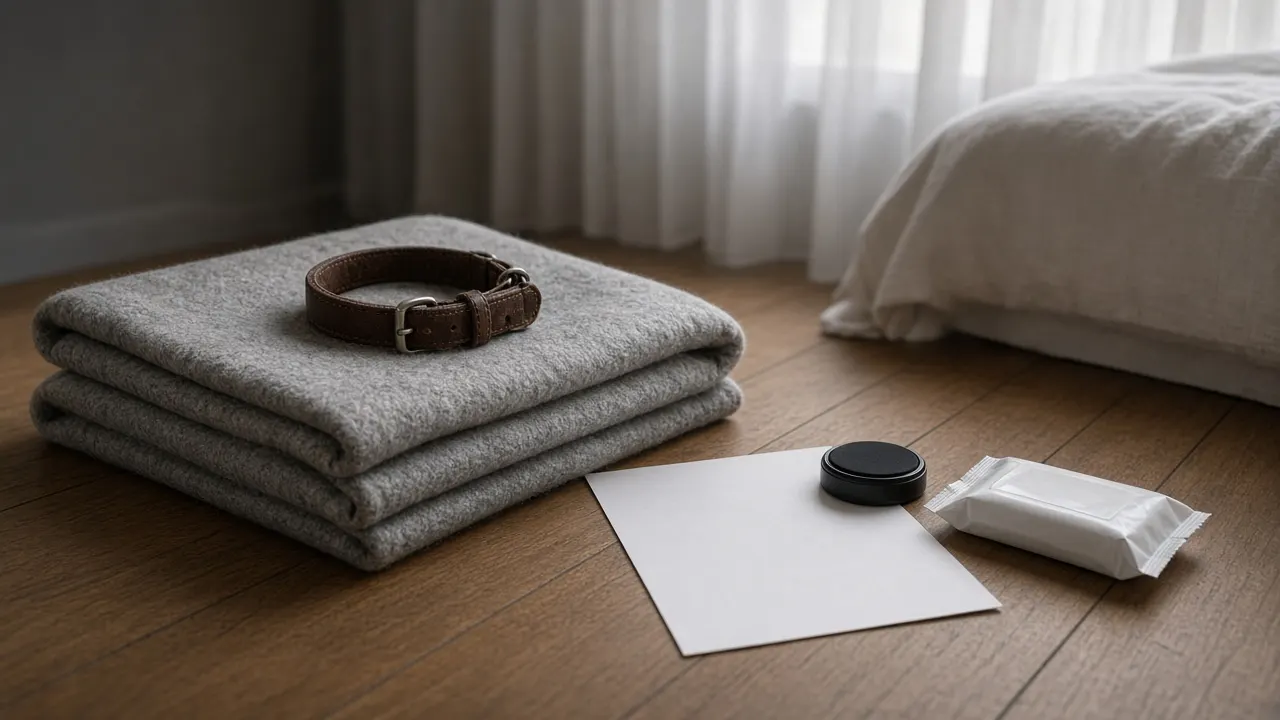
- A towel or blanket to lay your pet on, on their side.
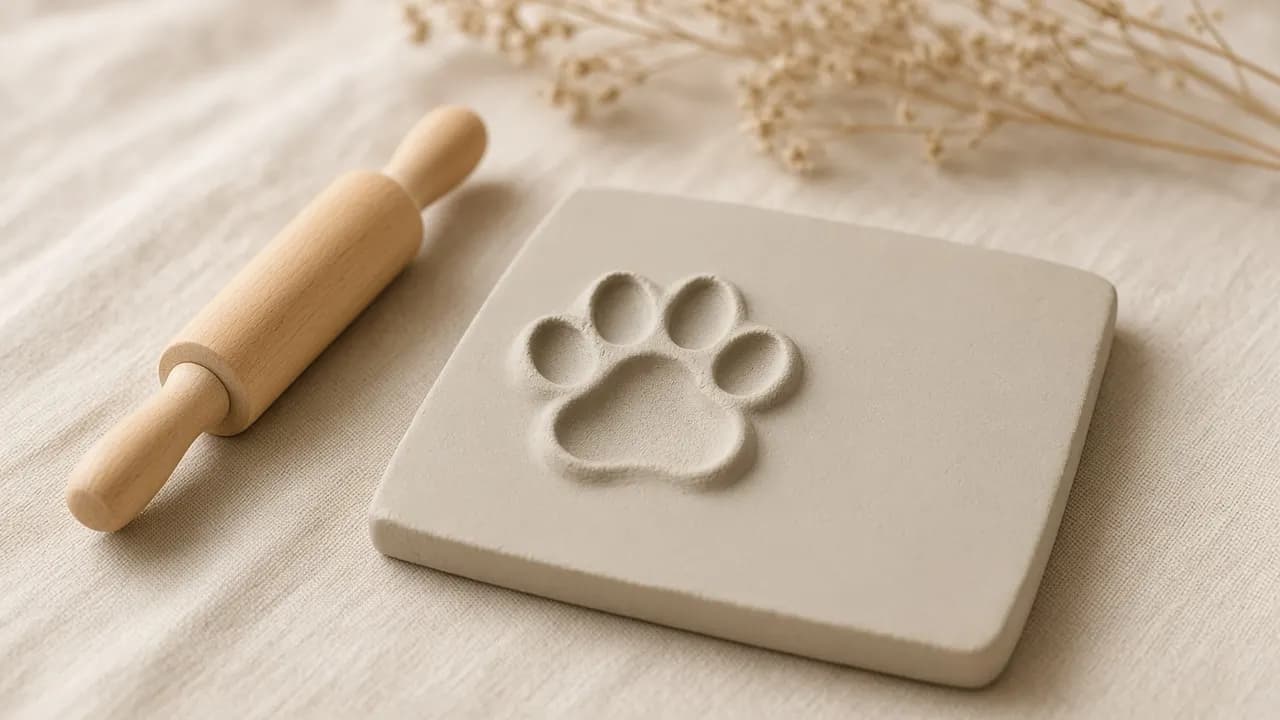
- Thick white card, a pet-safe ink pad or an inkless kit, or a disc of soft clay.
- A hardback book or board to rest the card or clay on.
- Unscented wipes and a soft cloth.
- Blunt-tipped scissors if the fur between the pads is long.
- A second person, if you have one, to help hold and steady.
Take a moment first. Close your pet's eyes if you can, stroke them and talk to them. There's no rush that justifies doing this in a hurry. If you're unsure which kit would suit, the paw print kit chooser works for this situation too.
Free tool
Paw print keepsake chooser
Match a print method to your pet's size, fur and the keepsake you want to keep.
The method
How do you take the print gently?
- Lay your pet on their side on a towel, with the paw you want resting naturally near the edge.
- Clean the pads gently with a wipe and dry them. Trim long tufts between the pads if they'd hide the print.
- Ink the pads lightly, dabbing the pad onto the paw rather than rolling the paw onto the pad. With an inkless kit, wipe the paw with the treated cloth.
- Bring the card to the paw. Rest the card on a hardback book, hold it flat against the pads, and press gently from behind the paw with your other hand. One steady press, then lift the card away.
- For clay, place the soft disc on the book and press it up against the paw in the same way, cradling the toes lightly so they spread.
- Clean the paw with a damp cloth afterwards, and wrap your pet again in the blanket.
Take two or three prints so you can keep the clearest. If the toes are already stiff, don't force them. Try the back paws, which may be easier, or ask the vet or crematory to take the print later, when the stiffness has passed.
Getting help
Who can take the print if you can't?
It's completely fine to hand this to someone else. Your hands may shake, you may not want your last memory to be of doing this, or you may simply not have the energy. Vets, home-visit vets and crematories take prints often. Our services page explains who offers what. And if the grief itself feels overwhelming, free lines such as Cornell's Pet Loss Support Hotline are staffed by trained veterinary students.
Crematories frequently offer them as small add-ons: one Arizona provider charges $10[4] for a clay paw impression, and a Virginia crematory includes a paw print and fur clipping in private packages priced at $189–$300[5]. Say what you'd like when you book, and ask them to confirm by email. Our paw print checklist covers what to ask about labelling and how the print comes home, and the memorial budget planner helps if you're adding up a cremation and extras. Across posted US price lists, our estimate of the median print add-on is ~$32[6].
Free tool
Memorial budget planner
Add up cremation, urn, keepsakes and a farewell so the total holds no surprises.
Afterwards
What should you do with the print afterwards?
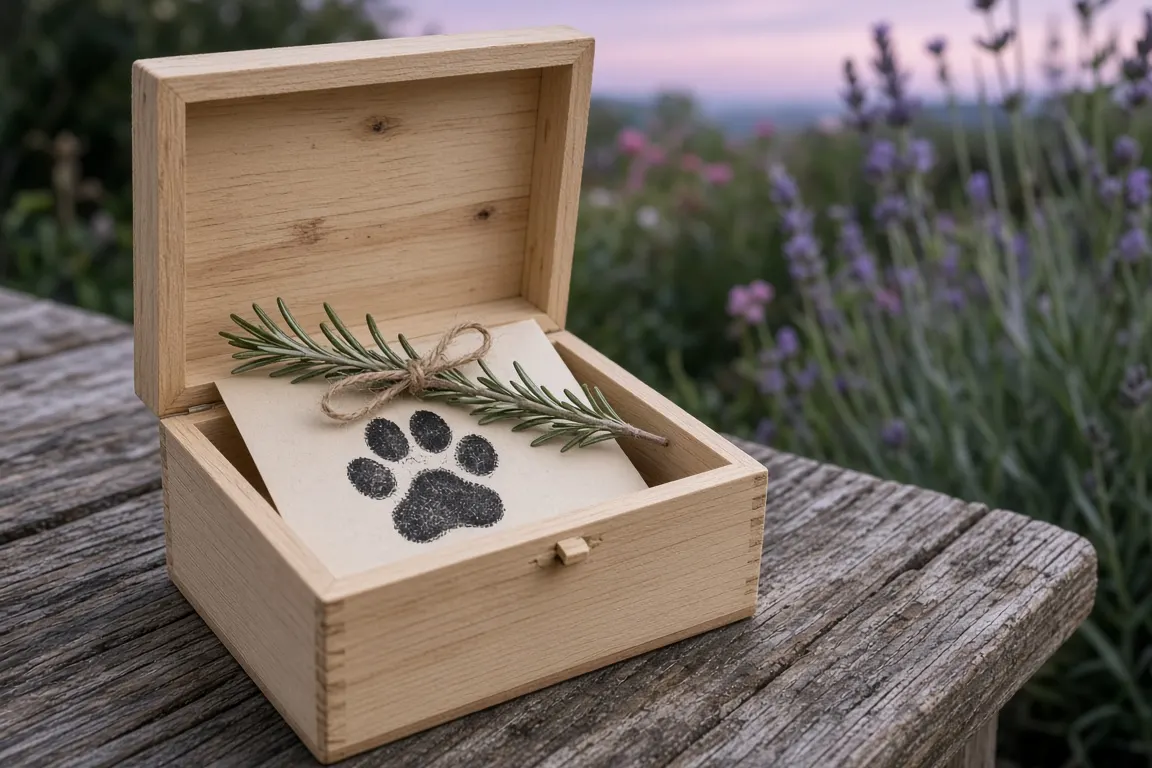
Let ink dry flat for an hour before you move it. Let clay dry slowly over several days in a cool room, then seal it. Then, when you're ready, scan or photograph the print flat in daylight. That copy protects you if anything happens to the original, and it's what jewelers and engravers will ask for.
Prints taken at a crematory often come back with the ashes, which many families receive within about 5-10 days[7]. There's no deadline for deciding what to do next. For ideas, see our list of paw print keepsake ideas, and for care, how to preserve a clay or ink paw print.
There's no wrong way to say goodbye to a paw. A slightly smudged print you took yourself is still theirs.
If you'd like us to find someone local who can take or finish a print, send us a few details and we'll reply by email. Our local pages are another place to start.

Reader polls
What would you choose?
Vote anonymously and see how other readers answered. The results are live counts from people who visit this site, so they show real opinions, not a scientific sample.
When did (or will) you take your pet's print?
Tap an answer to vote and see how others answered. Anonymous.
What worries you most about taking a print yourself?
Tap an answer to vote and see how others answered. Anonymous.
What was the hardest part of losing your pet?
Tap an answer to vote and see how others answered. Anonymous.

Questions people ask
How soon after death should I take my pet's paw print?
Within the first two hours is easiest, because the paws are still soft and the toes spread naturally. After that the body stiffens for a while, which makes it harder but not impossible. Keeping your pet somewhere cool gives you more time, and a vet or crematory can take a print any time before cremation.
Is ink or clay better after a pet has died?
Ink or an inkless kit is usually easier, because you can bring the card to the paw without lifting or pressing a heavy leg. Clay works too if you press the disc up against the paw on a board. If you can, take an ink print first and then clay, so you have both.
What if my pet's paw is too stiff to print?
Don't force it. Try a back paw, which may be less stiff, or wait: the stiffness passes again later. You can also ask the vet or crematory to take the print, since they can do it at a later stage before cremation. A nose print is often still easy when paws are difficult.
Can I take a paw print if my pet died at the vet?
Yes. Ask the clinic whether you can have a few quiet minutes to take it yourself, or ask the team to take it for you before your pet is collected. If your pet has already gone to the crematory, call them directly and ask them to take one on arrival.
Is it upsetting to take a paw print after death?
It can be emotional, and many people cry while doing it. Most also say they're glad they did. If you think it will be too much, ask someone else to do it, or let the vet or crematory take it. There's no right answer, only what feels bearable to you.


Sources and our estimates
- [1] Overall, 65.9% of Dog Aging Project dogs died at a veterinary clinic or hospital and 32.4% at the owner's home or property. Dog Aging Project End of Life Survey - Journal of the American Veterinary Medical Association (2026), via PubMed Central, 2026.
- [2] 14.7% of Dog Aging Project dogs died at home without any veterinary involvement. Dog Aging Project End of Life Survey - Journal of the American Veterinary Medical Association (2026), via PubMed Central, 2026.
- [3] The most common owner preference (26.1%) was for a deceased pet to stay at the vet hospital less than 24 hours before transport to the crematory or cemetery; a further 18.1% said no more than 1-2 days. Cooney, Kogan, Brooks, Ellis - Pet Owners' Expectations for Pet End-of-Life Support and After-Death Body Care, Topics in Companion Animal Medicine (2020), 2020.
- [4] Memorial add-ons at A Greener Place: $15 laser-engraved paw print, $10 clay paw impression, $10 nose print, $5 fur clipping. A Greener Place Pet Aquamation – Pricing, 2026.
- [5] Heavenly Paws Cremations in Chantilly, Virginia, sells private cremation packages at $189 (temporary container), $225 (wooden urn) and $300 (wooden photo urn), each including a paw print and fur clipping. Heavenly Paws Cremations – Packages, 2026.
- [6] Paw-print add-ons at US crematories have a median price of about $32, from $10 to $76. Our estimate: median of [$10 clay (AGP), $15 laser engraving (AGP), $49 ink (Final Gift), $76 clay (Final Gift)]. How we calculate.
- [7] A US aftercare guide says many families receive private cremation ashes within about one to two weeks, with 5-10 days commonly quoted. Funeral.com - Pet Cremation Timelines: How Long Until Ashes Are Returned, 2026.
Find someone to take a print near you
Tell us what you need and where you are. We'll reply by email with clear options and prices so you can decide in your own time.