When should you take your pet's paw print? A timeline for every situation
The easiest time to take a paw or nose print is while your pet is alive, relaxed and still enjoying good days; the last possible time is just before cremation or burial. Between those two points there are four realistic windows, and knowing which one you're in tells you exactly what to do next.
By the Paw Print Keepsakes & Memorial Impressions editorial team · Updated September 24, 2026 · 6 min read · Sources
- Four print windows, from months ahead to the crematory
- What changes in the hours after a pet dies
- A plan for sudden losses and missed chances
The short answer
Which print window are you in right now?
Take the print as early as you comfortably can. A healthy or senior pet on a calm afternoon gives the clearest print with the least stress for everyone, and nothing about taking it early means you've given up. If that moment has passed, you still have three more chances: at the goodbye appointment, in the first hours at home, and at the crematory before cremation begins.
- Window 1: weeks or months ahead. Your pet is alive and comfortable. You can take several tries, pick the clearest and even do a nose print too.
- Window 2: the goodbye appointment. Your vet or home-visit vet takes the print while you sit with your pet or just afterwards.
- Window 3: the first hours after death. Your pet is at home or at the clinic, and you, the vet team or a friend can still take one.
- Window 4: at the crematory. Staff take the print when your pet arrives, as long as the request travelled with them.
Once cremation or burial has happened, an original impression can't be made. A photograph of the paw can still become art or engraving later, but it isn't the same as a real print, so it's worth knowing which window you're in today. Our poll results show when other readers took theirs.
When did (or will) you take your pet's print?
Tap an answer to vote and see how others answered. Anonymous.
Planning ahead
Why is the earliest window usually the easiest?
A living pet who is fed, warm and a little sleepy has soft, flexible toes that spread naturally under light pressure. That's what gives a clay print its clear pads and an ink print its crisp outline. You also get as many attempts as you want: re-roll the clay, fetch fresh card, try again tomorrow.
There's an emotional reason too. In an RSPCA survey of more than 4,000 bereaved owners, 75.4%[1] said they grieved before their pet actually died. That early sadness often has nowhere to go. Choosing a Sunday, getting the kit out and pressing a paw is one small, loving thing you can do with it, rather than waiting for a day when you'll have no energy left.
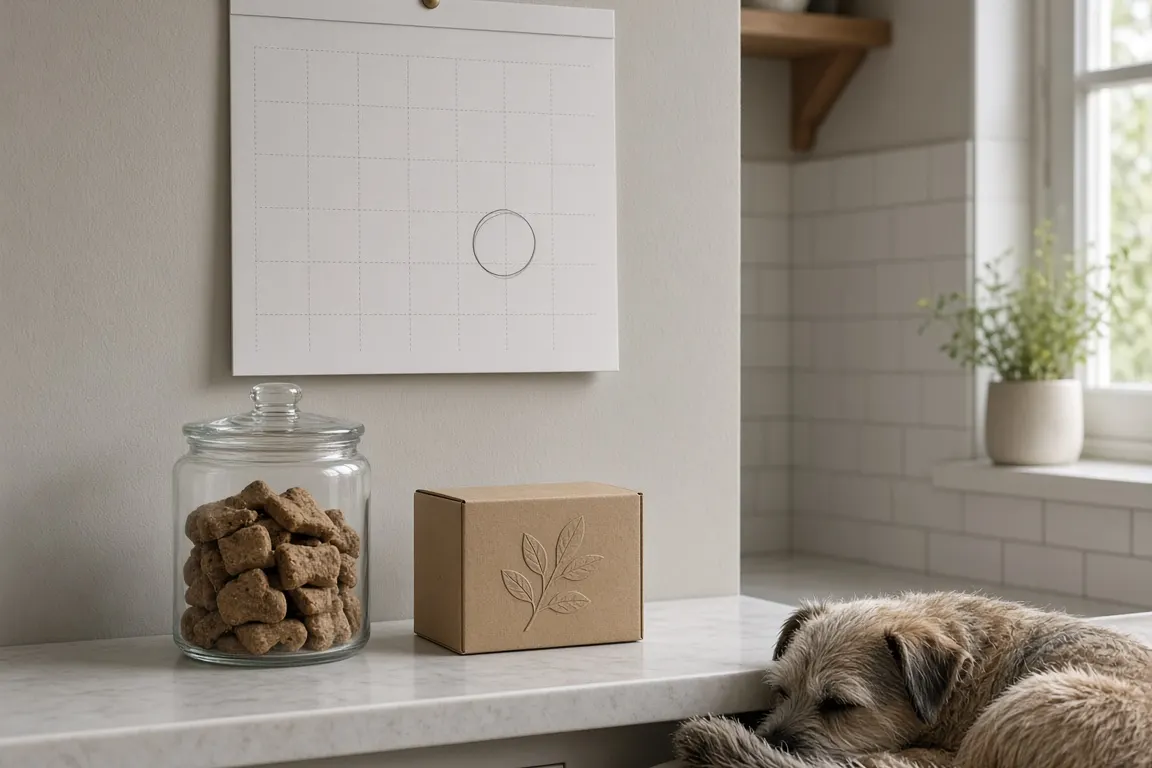
Good moments to plan it: after a senior diagnosis, on a birthday, before a big move, or when your vet first mentions quality of life. Our paw print kit chooser suggests clay, ink, inkless or a cast depending on your pet's size and fur, so you can order the right kit before you need it.
Free tool
Paw print keepsake chooser
Match a print method to your pet's size, fur and the keepsake you want to keep.
At the appointment
How do you get a print at the goodbye appointment?
Most dogs don't die unexpectedly. In the US Dog Aging Project's study of end-of-life data, 83.0%[2] of dog deaths were by euthanasia, and of those, 76.7% happened at a clinic and 22.8% at home[3]. That means most families have a booked appointment, and a booked appointment is the moment to ask for a print.
Ask when you make the booking, not in the room. Say which kind you want (clay, ink, nose print or all three), whether you'd like to watch or have it done afterwards, and whether you'll bring your own kit. Many clinics keep clay kits for exactly this, and home-euthanasia vets often carry one. For the words to use, our note on asking your vet about prints ahead of time has a short script.
The first hours
Can you still take a print after your pet has died?
Yes, and many families do. The kindest time is within the first couple of hours, while the legs and toes are still soft and easy to position. Over the following hours the body gradually stiffens, which makes spreading the toes harder, although it passes again later. Keeping your pet somewhere cool buys time either way.
Ink or an inkless wipe is usually easier than clay at this stage, because you can bring the card to the paw rather than pressing a heavy leg down. Our step-by-step article on how to take a paw print after a pet dies walks through positioning gently, and what to do if your hands aren't steady.
If your pet died at the clinic, the team will usually hold them in a cool room. Owners generally want that stay to be short: 26.1%[4] in one US survey said less than 24 hours was their preferred limit. Ask the clinic to take the print before your pet is collected, and to write the request on their paperwork.
Last chance
What if the only chance left is at the crematory?
Crematories take prints every day, and many include one in their packages. A Virginia crematory, for example, sells private cremation packages at $189–$300[5] that each include a paw print and fur clipping. Elsewhere it's an add-on: one Arizona provider charges $10[6] for a clay paw impression and the same for a nose print. By our estimate, the median paw-print add-on at US crematories is ~$32[7].
The risk in this window isn't cost, it's the handover. Your request has to get from you to the vet to the crematory's intake team before cremation starts. Put it in writing at each step and ask the crematory to confirm it back. Our paw print checklist covers labelling and how the print comes home. Our services page compares the vet, crematory and home-kit routes side by side.
~$32[7]
Paw-print add-ons at US crematories have a median price of about $32, from $10 to $76.
5-10 days[8]
A US aftercare guide says many families receive private cremation ashes within about one to two weeks, with 5-10 days commonly quoted.
One US aftercare guide says most private cremations return within about 5-10 days[8], and prints often come back in the same package as the ashes. If you'd like the print sooner, for a jewelry order for example, ask whether it can be sent separately.
If it's too late
What can you do if the print window has closed?
It happens often, especially after sudden losses and emergency visits, and it isn't a failure. Fewer than half (47%[9]) of UK cremation buyers in the Competition and Markets Authority's survey even recalled being told about the full range of options, so a missed print is usually a missed conversation, not a missed duty.
- Look through your photos. A clear, straight-on picture of a paw or nose can be traced by an engraver or tattoo artist into a line drawing.
- Check the bed and the car. Muddy paw marks on a car seat, a doormat or a sofa throw are real prints. Photograph them flat before washing anything.
- Ask the vet. Some clinics keep a spare print, or took one without mentioning it.
- Choose a different keepsake. A fur clipping, collar, tag or a small portion of ashes in jewelry can carry the same meaning.
If you want to add up what a replacement keepsake would cost, the memorial budget planner lets you drop in real quotes. Our comparison of clay, ink, metal and glass prints also shows which formats can be made from a photo.
A print taken on an ordinary afternoon is still a print of the paw you knew. It doesn't need to be taken on the last day to mean something.
Species differences
Does the timing change for cats, rabbits, birds or horses?
The windows are the same, but the practicalities shift. Cats tolerate paw handling for only a second or two, so a sleepy post-meal moment in window one matters more for them than for dogs. Rabbits and guinea pigs have furry soles rather than pads, so an early practice run shows you whether soft clay gives a clearer shape than ink.
Horse owners usually plan a hoof print with the farrier, weeks ahead, because it takes a clean hoof and a steady horse on firm ground. Small birds are easiest in window one too: walking across inkless paper leaves a delicate trail that's hard to recreate later. If you'd like help finding someone local who does these, send us a few details and we'll reply by email. Or browse our local pages to see who serves your area.

Reader polls
What would you choose?
Vote anonymously and see how other readers answered. The results are live counts from people who visit this site, so they show real opinions, not a scientific sample.
When did (or will) you take your pet's print?
Tap an answer to vote and see how others answered. Anonymous.
When did you (or will you) decide on aftercare?
Tap an answer to vote and see how others answered. Anonymous.
Which memorial feels most like your pet?
Tap an answer to vote and see how others answered. Anonymous.

Questions people ask
How soon after death should a paw print be taken?
Ideally within the first two hours, while the toes are still soft and easy to spread. After that the body stiffens for a while, which makes positioning harder but not impossible. If your pet is kept cool at home or at the clinic, a print is usually still possible until they're collected, and a crematory can take one on arrival if you ask.
Is it morbid to take a paw print while my pet is still healthy?
Not at all. Many owners take prints of young pets simply because they love their paws, and a relaxed living pet gives the clearest result. Taking one early also means you're not trying to do a craft project on the hardest day of the year. You can always take another later if you want one closer to the end.
Will the vet take a paw print automatically at euthanasia?
Some clinics do it as standard and some never offer it, so don't assume either way. Ask when you book the appointment, say which type of print you'd like, and check whether there's a fee. If the clinic doesn't do prints, ask whether you can bring your own kit, or whether the crematory they use can take one instead.
Can the crematory take a print if my pet has already left the vet?
Usually, yes, as long as cremation hasn't started. Call the crematory directly, give your pet's name and the clinic they came from, and ask them to note the request on your pet's file. Then ask for a quick confirmation by email or text, so you know the message reached the people who will actually take the print.
Can I take both a paw print and a nose print?
Yes, and it's worth doing both if you have the chance. A nose print needs only a light touch of ink or an inkless wipe and takes seconds, so it fits easily into the same session. Nose prints are popular for jewelry because the ridged pattern stays recognizable even when it's engraved very small.
What if my pet was cremated before I thought of a print?
An original impression isn't possible after cremation, but a close, flat photograph of a paw or nose can be turned into an engraving, pendant, drawing or tattoo stencil. Look for old paw marks on car seats or mats as well. Many families also choose a fur clipping, a collar or a little ash in jewelry instead.


Sources and our estimates
- [1] 75.4% of RSPCA pet-loss survey respondents experienced anticipatory grief before their pet died. RSPCA — Pet Loss Survey Results, 2026.
- [2] In the Dog Aging Project, 83.0% of 646 US dog deaths (Dec 2019-Mar 2021) were by euthanasia. Dog Aging Project End of Life Survey - Journal of the American Veterinary Medical Association (2026), via PubMed Central, 2026.
- [3] Of euthanized dogs in the Dog Aging Project, 76.7% were euthanized at a veterinary clinic or hospital and 22.8% at the owner's home. Dog Aging Project End of Life Survey - Journal of the American Veterinary Medical Association (2026), via PubMed Central, 2026.
- [4] The most common owner preference (26.1%) was for a deceased pet to stay at the vet hospital less than 24 hours before transport to the crematory or cemetery; a further 18.1% said no more than 1-2 days. Cooney, Kogan, Brooks, Ellis - Pet Owners' Expectations for Pet End-of-Life Support and After-Death Body Care, Topics in Companion Animal Medicine (2020), 2020.
- [5] Heavenly Paws Cremations in Chantilly, Virginia, sells private cremation packages at $189 (temporary container), $225 (wooden urn) and $300 (wooden photo urn), each including a paw print and fur clipping. Heavenly Paws Cremations – Packages, 2026.
- [6] Memorial add-ons at A Greener Place: $15 laser-engraved paw print, $10 clay paw impression, $10 nose print, $5 fur clipping. A Greener Place Pet Aquamation – Pricing, 2026.
- [7] Paw-print add-ons at US crematories have a median price of about $32, from $10 to $76. Our estimate: median of [$10 clay (AGP), $15 laser engraving (AGP), $49 ink (Final Gift), $76 clay (Final Gift)]. How we calculate.
- [8] A US aftercare guide says many families receive private cremation ashes within about one to two weeks, with 5-10 days commonly quoted. Funeral.com - Pet Cremation Timelines: How Long Until Ashes Are Returned, 2026.
- [9] Fewer than half (47%) of UK cremation buyers recalled being told about a range of options, including communal cremation or home burial. UK Competition and Markets Authority - Veterinary services for household pets, Provisional decision report Part A (Oct 2025), 2025.
Find who can take a print near you
Tell us what you need and where you are. We'll reply by email with clear options and prices so you can decide in your own time.