How to preserve a clay or ink paw print for decades
To make a clay paw print last, dry it slowly for several days, seal it with a matte acrylic sealer and keep it away from heat, damp and sun; for ink, use acid-free card and UV-filtering glass. Then scan both, because a good digital copy is the one backup that can't crack or fade.
By the Paw Print Keepsakes & Memorial Impressions editorial team · Updated September 24, 2026 · 5 min read · Sources
- Drying and sealing clay without cracks
- Storing ink prints so they don't fade or yellow
- Repairing chips, cracks and smudges
The short answer
How do you keep a paw print from cracking or fading?
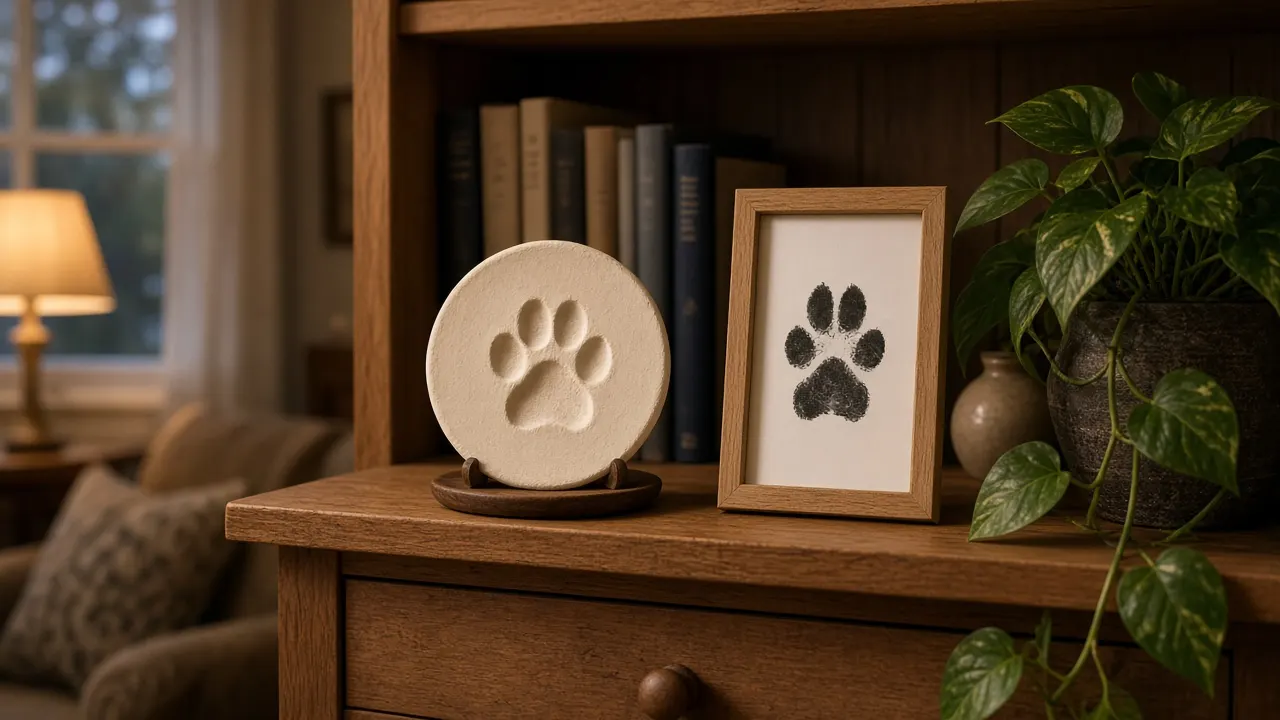
Slow down the drying, seal the surface and control where it lives. Most damage to clay prints happens in the first week, when they dry too fast near a heater or sunny window. Most damage to ink prints happens over years, from light, damp and acidic card. Both problems are easy to prevent once you know about them.
The other half of preservation is a copy. Photograph or scan the print as soon as it's dry. If the original is ever dropped, flooded or faded, a good file lets you make a new framed print, an engraving or even a ceramic reproduction. Whether other readers kept one original or several is on the poll results page.
How many copies of the print would your family want?
Tap an answer to vote and see how others answered. Anonymous.
Drying clay
How long should a clay paw print dry, and where?
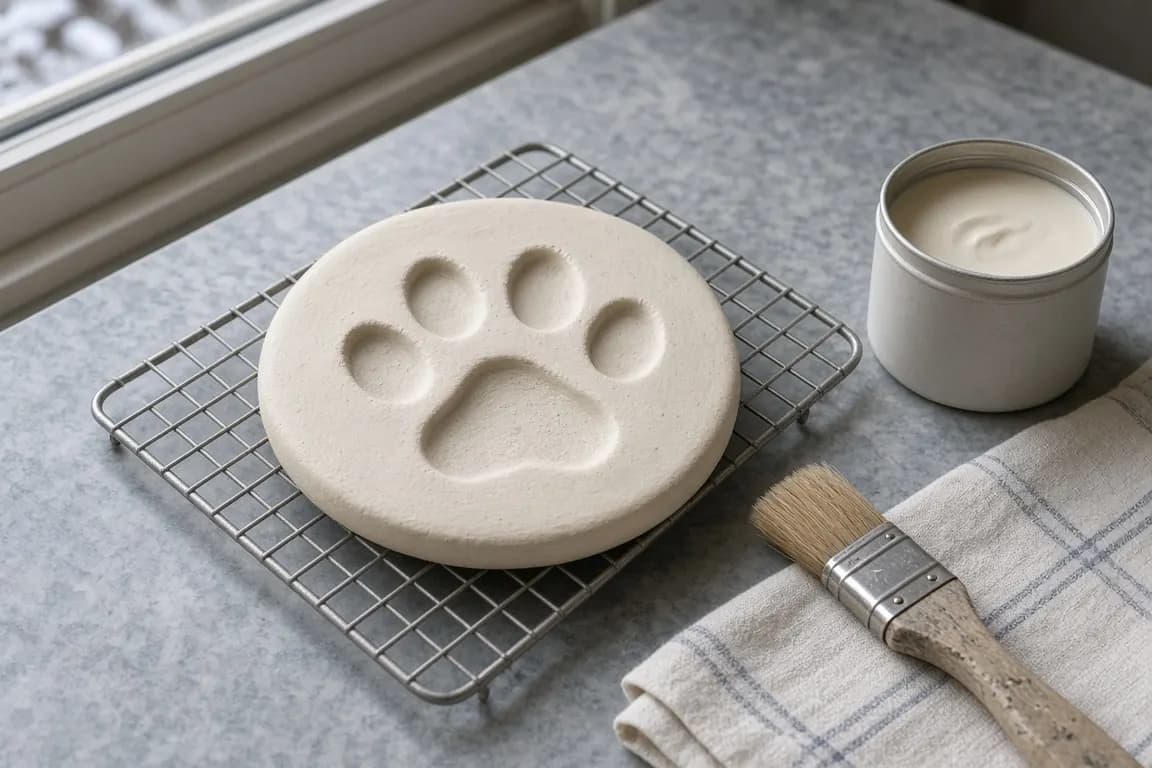
Air-dry clay needs two to four days to dry through, longer if it's thick or the air is humid. Dry it flat on a wire rack or a sheet of baking paper, in a cool room, away from radiators, stoves and sunny windowsills. Turn it once or twice a day, gently, so the back dries at the same rate as the front.
Fast drying is what causes cracks: the surface shrinks while the inside is still wet. If you see a hairline crack forming, cover the print loosely with a damp tea towel for a few hours to slow things down. Oven-bake polymer clay is different; follow the kit's temperature and time exactly, and let it cool slowly in the oven with the door ajar.
Sealing
Should you seal a clay paw print, and with what?
Yes. Unsealed air-dry clay absorbs moisture from the air, which softens it and makes it crumble at the edges over time. A thin coat of matte or satin acrylic sealer, brushed or sprayed once the clay is fully dry, protects it without adding a plastic shine. Let the first coat dry, then add a second.
Avoid sealing too early; trapped moisture can cause cloudy patches or cracks. Don't use varnish meant for wood, which can yellow. If you've painted the edges or added the name, seal over the paint too. Plaster casts benefit from the same treatment, since plaster is porous and marks easily.
Ink prints
How do you store an ink print so it doesn't fade?
Ink fades with ultraviolet light and card yellows with acid. Keep unframed prints flat in an acid-free sleeve or folder, somewhere dark and dry, not a basement or an attic. When you frame, ask for an acid-free mount and UV-filtering glass or acrylic, and hang the frame on an inside wall away from direct sun. That's the approach the Library of Congress recommends for storing works on paper: room temperature or cooler, about 35% relative humidity, and as little light as possible.
Inkless prints behave a little differently: the color comes from a chemical reaction on special paper rather than from ink sitting on top. Treat them exactly as you would a precious photograph: flat, dark, dry and behind good glass. Our guide to displaying prints and pairing tags covers frame choice and placement in more detail.
Backups
Why is scanning a paw print so important?
Because it's the only copy that can't crack, fade or be lost in a move. Photograph the print flat on a table in soft daylight, with the camera held directly above, or use a flatbed scanner at a high resolution. For clay, light from one side picks out the pads clearly. Save the file in at least two places. The National Archives includes digitizing in its advice on preserving family papers and photos, and a paw print deserves the same care.
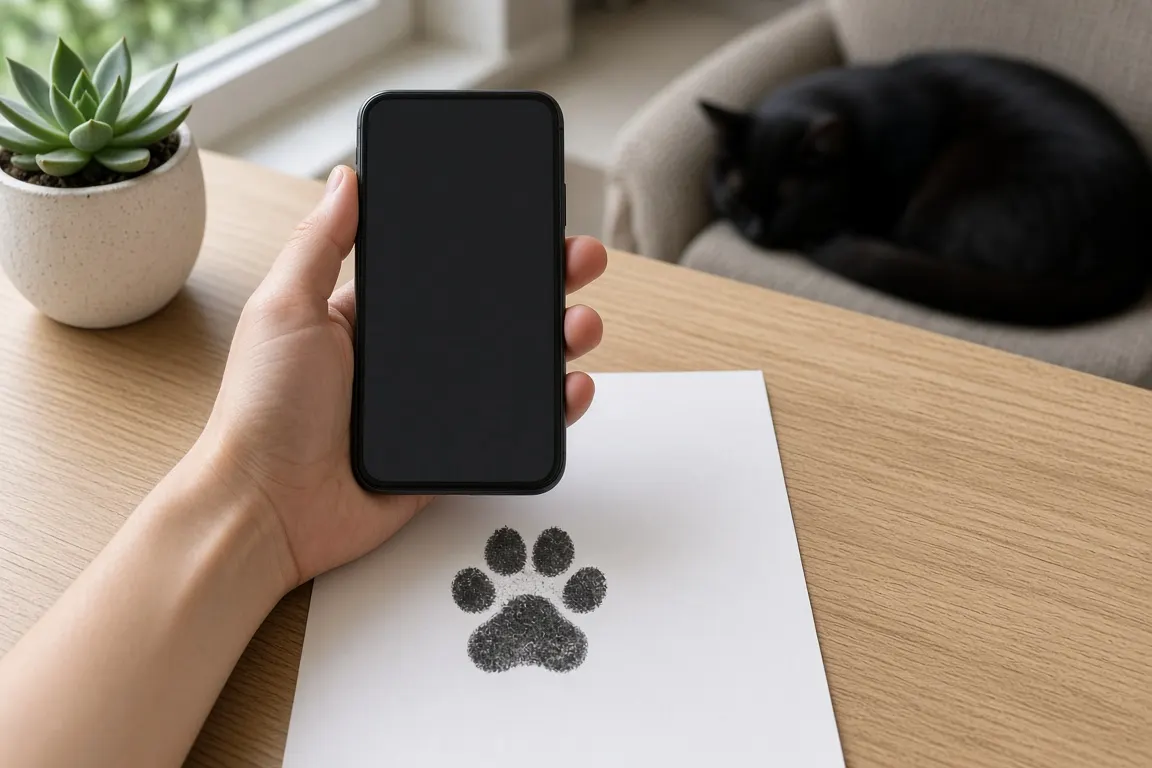
Digital keepsakes are becoming mainstream: one market forecast names digital memorials the fastest-growing segment of pet funeral services, at 13.83%[1] a year to 2030. From a scan, a maker can produce an engraved pendant, a framed print for each relative or a tattoo stencil. One US maker charges $143[2] for a custom sterling silver paw-print charm, before the chain, made from a flat print. Our article on turning a paw print into jewelry or a tattoo explains what makers need from the file.
Repairs
Can a cracked or chipped clay paw print be repaired?
Often, yes, if the break is clean.
- Hairline cracks: work a little fresh clay of the same type, softened with a drop of water, into the crack with a toothpick. Let it dry slowly, then reseal.
- A clean break: join the pieces with a clear craft glue suitable for ceramics, hold them with tape while it sets, then fill the seam with clay and reseal.
- Chipped edges: leave them if they're small; they're part of the print's history. For larger chips, rebuild with clay and paint to match.
- Smudged ink: don't try to wipe it. Scan it and ask a designer or engraver to clean up the digital file instead.
If a print is too damaged to display, a professional can make a durable copy. A Canadian studio charges from CA$155[3] for a handmade ceramic paw-print keepsake, and in the UK one body-casting studio charges from £120[4] to cast a small dog's paw pads in resin, though both usually need the paw or a mold rather than a photo. Ask first what they can work from. Our services page explains who makes copies, and if you're remounting a repaired print, building a memory frame shows how to fix clay without glue.
Starting again
Should you take a second print while you still can?
If your pet is still with you, yes. A second print is the simplest insurance there is, and it lets you experiment with a different method. At crematories, extra prints are inexpensive; by our estimate the median US paw-print add-on is ~$32[5], and one network charges $49 for ink or $76 for clay[6].
The paw print kit chooser helps you choose a method, and the memorial budget planner helps if you're adding up extra prints, frames or copies. For a comparison of how each format ages, see clay, ink, metal and glass prints.
Free tool
Paw print keepsake chooser
Match a print method to your pet's size, fur and the keepsake you want to keep.
Dry it slowly, seal it once it's dry, and scan it before anything else. Those three habits protect nearly every print.
If you'd like help finding a framer, ceramicist or engraver near you, send us a few details and we'll reply by email. Our local pages list makers by city.

Reader polls
What would you choose?
Vote anonymously and see how other readers answered. The results are live counts from people who visit this site, so they show real opinions, not a scientific sample.
How many copies of the print would your family want?
Tap an answer to vote and see how others answered. Anonymous.
Which memorial feels most like your pet?
Tap an answer to vote and see how others answered. Anonymous.
Do you keep more than one memorial for the same pet?
Tap an answer to vote and see how others answered. Anonymous.

Questions people ask
Why did my clay paw print crack while drying?
Usually because it dried too fast. When the surface dries before the inside, it shrinks and splits. Heat from a radiator, stove or sunny window is the common cause, as is a very thick disc. Dry prints slowly in a cool room, turning them daily, and fill small cracks with softened clay before sealing.
What sealer should I use on a clay paw print?
A matte or satin water-based acrylic sealer, brushed or sprayed in two thin coats once the clay is completely dry. It protects the print from humidity and handling without a heavy shine. Avoid wood varnish, which can yellow, and never seal clay that still feels cool or damp to the touch.
How long will an ink paw print last?
With pet-safe ink on acid-free card, kept away from sunlight and damp, an ink print can last for decades. Framing it behind UV-filtering glass with an acid-free mount helps most. Ordinary card slowly yellows and ordinary glass lets in fading light, so ask your framer for conservation materials.
Can I make a copy of a clay paw print?
Yes. The simplest copy is a photograph taken straight down with light from one side, which shows the pads clearly and can be printed, engraved or framed. For a physical copy, a caster can take a mold of the clay and reproduce it in plaster, resin or metal. Ask before sending your only original.
Is it safe to wipe dust off a clay paw print?
Use a soft, dry brush such as a clean make-up brush or a small paintbrush. Don't use a wet cloth on air-dry clay, even if it's sealed, because moisture can soften the surface over time. For framed prints, dust the frame and glass, not the clay inside.


Sources and our estimates
- [1] Digital memorials are the fastest-growing pet funeral service segment in Mordor Intelligence's forecast, at a 13.83% CAGR for 2025–2030. Mordor Intelligence — Pet Funeral Services Market report page, 2025.
- [2] A custom sterling silver actual-paw-print charm costs $143 before the chain (about $59–$79 for silver) and takes about 2 weeks to make. String of Jewels – Actual paw print necklace, 2026.
- [3] Spawts, a Canadian studio, charges from CA$155 for a handmade ceramic paw-print keepsake and asks buyers to allow 3–4 weeks. Spawts – Ceramic keepsakes, 2026.
- [4] Brighton Body Casting in the UK charges from about £120 to cast a small dog's paw pads in resin; medium and large breeds cost about 1/5 and 1/3 more. Brighton Body Casting – Pets, 2026.
- [5] Paw-print add-ons at US crematories have a median price of about $32, from $10 to $76. Our estimate: median of [$10 clay (AGP), $15 laser engraving (AGP), $49 ink (Final Gift), $76 clay (Final Gift)]. How we calculate.
- [6] Final Gift charges $49 for ink paw prints, $76 for a clay or silver-clay paw print, $111 framed, and $133 framed with a fur clipping; a fur clipping alone costs $23. Final Gift Pet Memorial Center – Memorial Products, 2026.
Get help preserving or copying a print
Tell us what you need and where you are. We'll reply by email with clear options and prices so you can decide in your own time.