Paw print guides: timing, materials, family and display
These four guides cover the big questions behind a paw print keepsake: when it can be taken, what it should be made of, how children can be part of it and where it should live afterwards. The first one matters most, because the chance to take a print ends at cremation.
- Start with timing: the one step you can't redo
- Materials compared on detail, lifespan and cost
- Practical help for families and for display
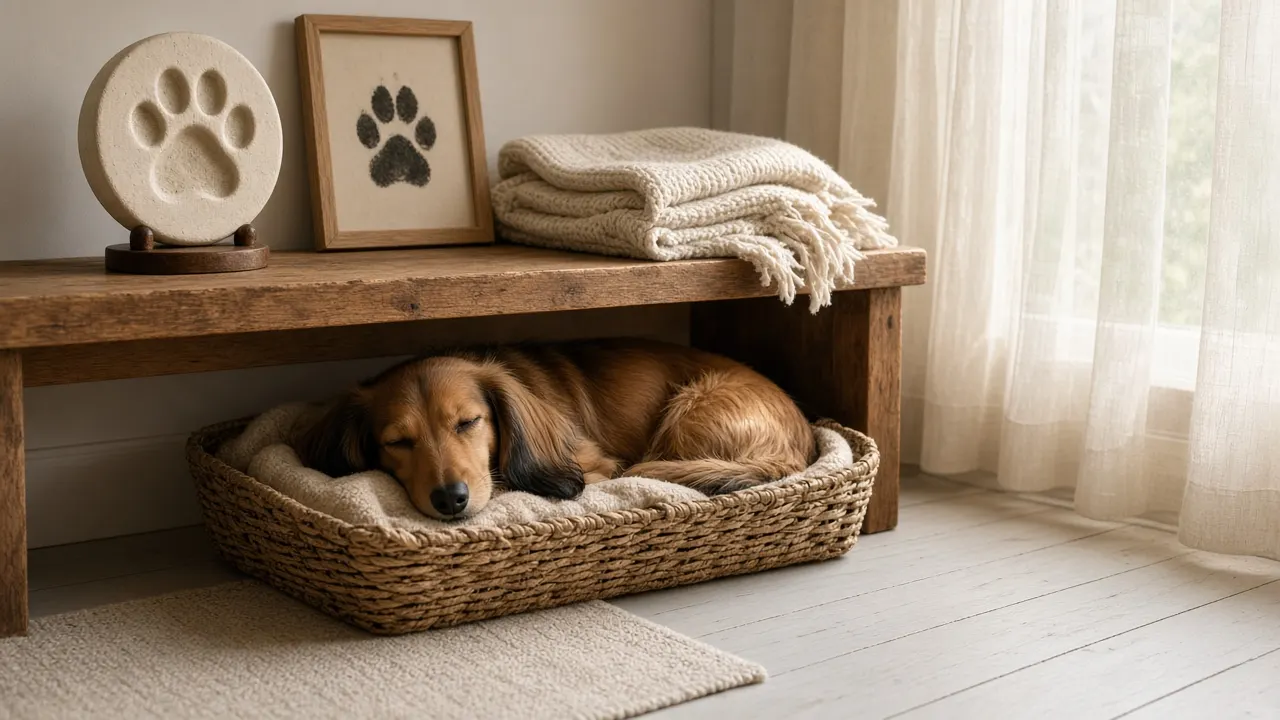
Where to start
Which paw print guide do you need first?
If your pet is still with you, or hasn't yet been cremated, start with timing. Every other decision can wait; the print can't. If the print is already in your hands, go straight to materials and display.
- When to take a paw print: the four windows, from months ahead to the crematory, and what to do if one has closed.
- Clay, ink, metal and glass compared: what each format looks like, how long it lasts and what it costs.
- Making a paw print with children: age-by-age roles, safe materials and what to say.
- Displaying a print and pairing it with a tag: frames, shelves, gardens and engraving.
Our guides go deep on a whole topic. For quick answers to single questions, such as how to take a nose print or make a clay print at home, see our blog.
All guides
In-depth guides to the decisions families face, written in plain English.
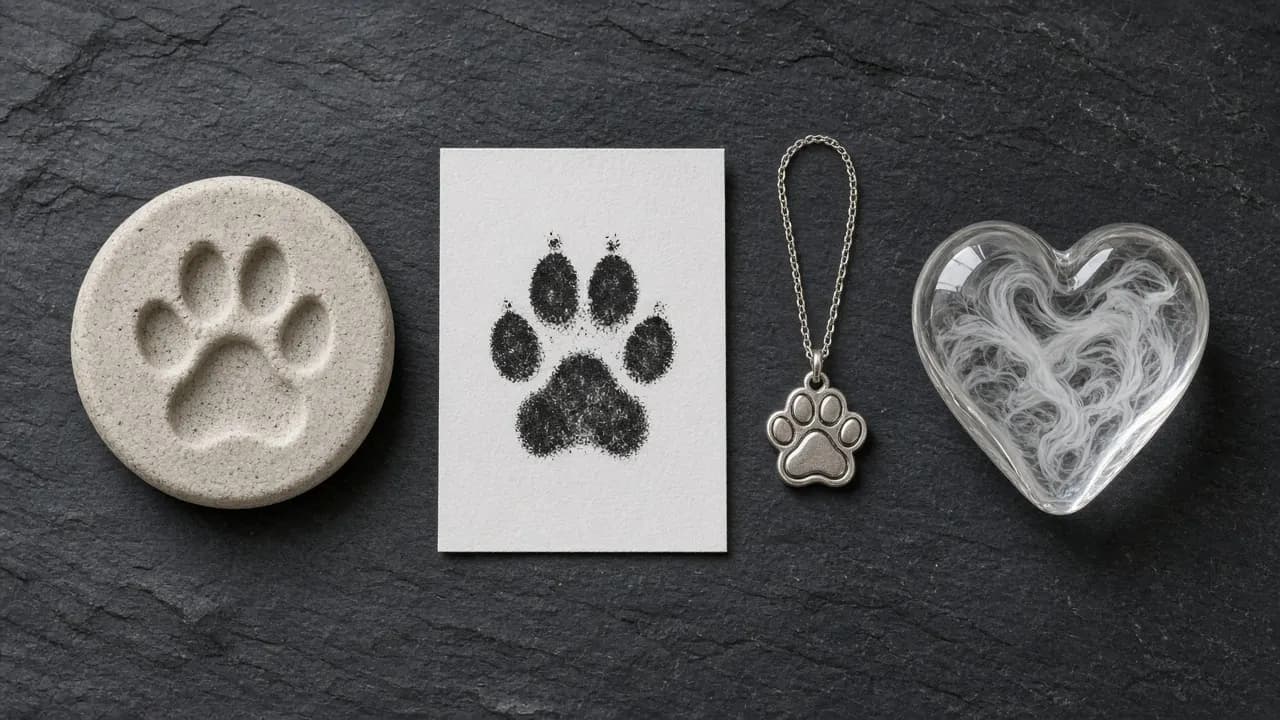
Clay, ink, metal or glass: which paw print format suits your keepsake?
How clay, ink, metal and glass paw prints compare on detail, durability and price, with real US figures and which ones can be made from a print you have.
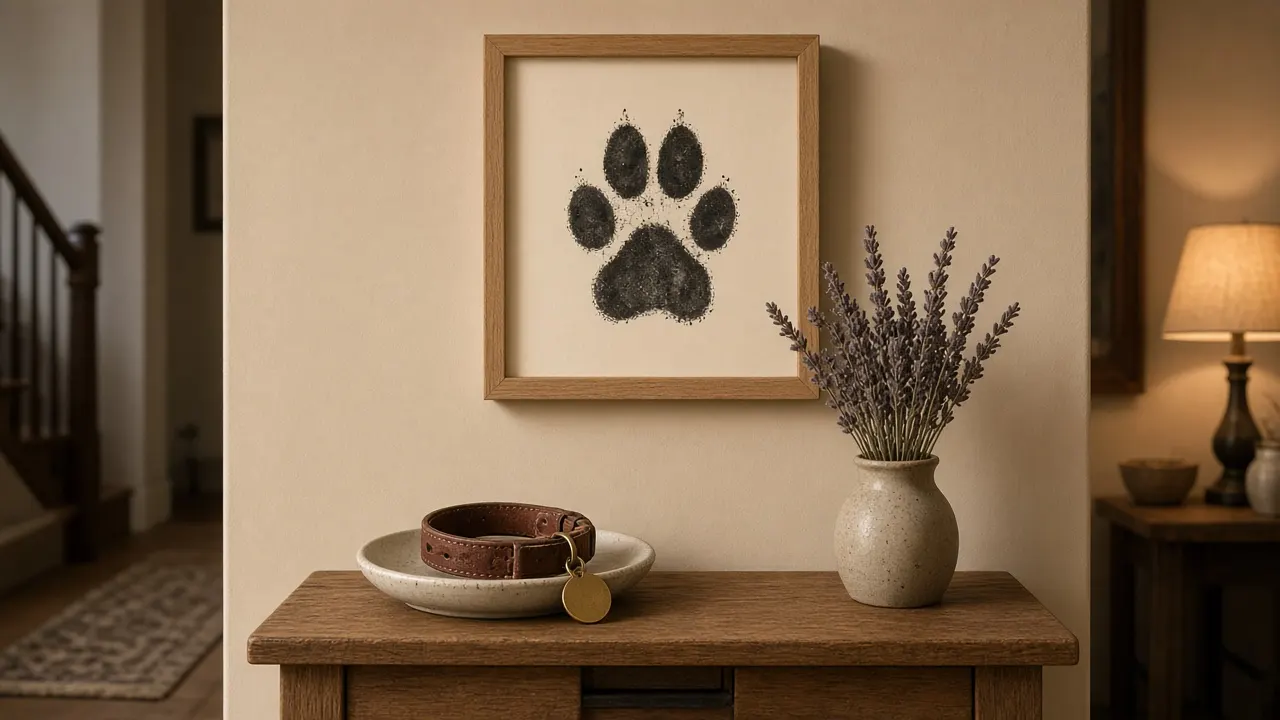
How to display a paw print, and what to pair it with
Where to display a clay or ink paw print so it lasts, frames versus shelves versus garden stones, and how to pair it with your pet's tag or a new engraved one.
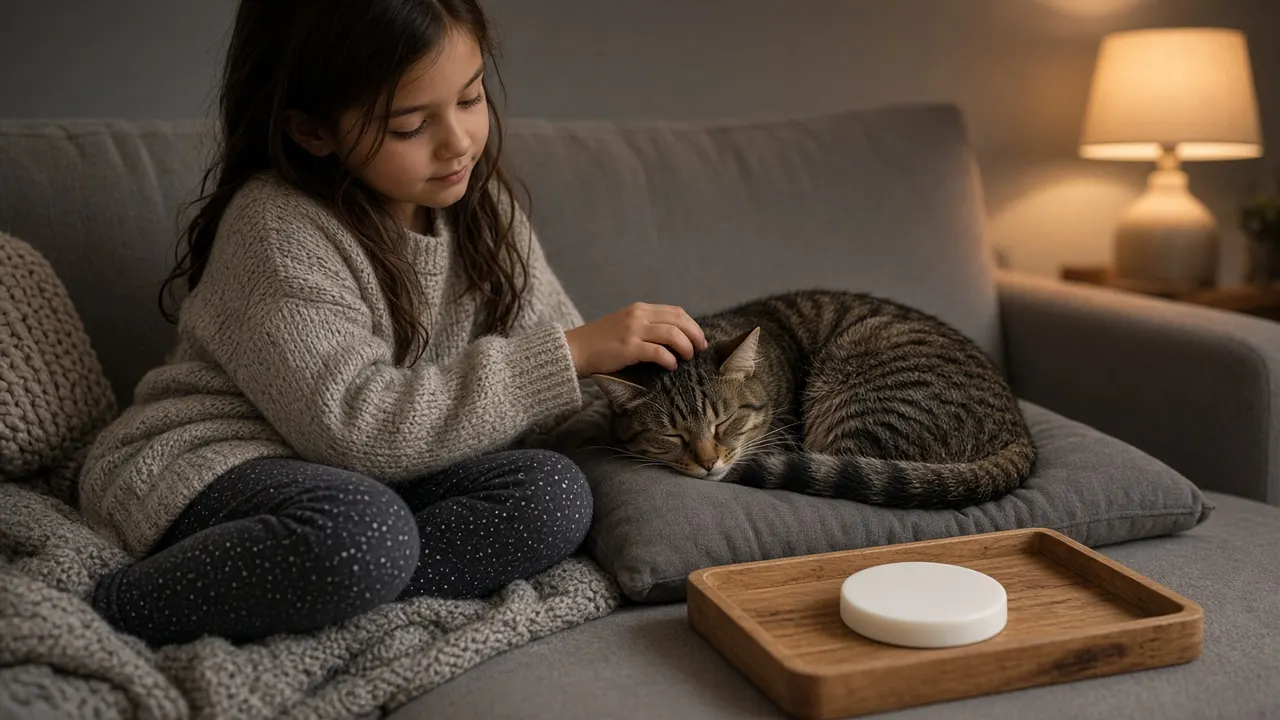
Making a paw print with children: gentle roles for every age
Should kids help make a pet's paw print? Age-by-age jobs, safe materials, what to say, and how to let a child join in without pressure or leave it out entirely.
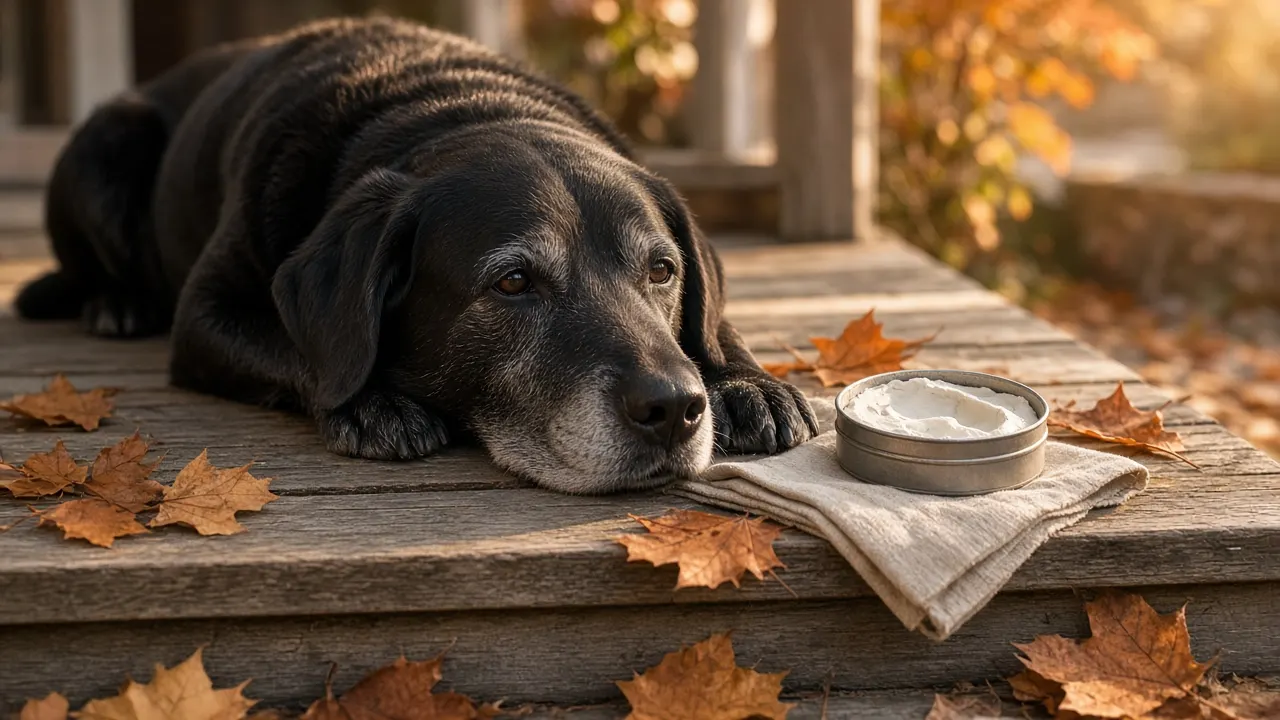
When should you take your pet's paw print? A timeline for every situation
The print window closes at cremation. See the four moments a paw or nose print can be taken, which gives the clearest result, and how to avoid missing it.
Timing
Why does timing come first?
Because it's the only step with a deadline. Once a pet has been cremated or buried, no new impression is possible, and in the rush of a final appointment the print is easy to forget. Planning it early also suits how grief often works: 75.4%[1] of respondents to the RSPCA's pet-loss survey grieved before their pet died, and a print gives that time something gentle to do.
The timing guide walks through each window in turn: a calm afternoon while your pet is well, the goodbye appointment, the first hours afterwards, and intake at the crematory. It also covers species differences, from cats who tolerate a two-second press to horses who need a farrier's help. The poll results show which window other readers chose.
When did (or will) you take your pet's print?
Tap an answer to vote and see how others answered. Anonymous.
Materials
How do you choose between clay, ink, metal and glass?
Think of it in two layers. The original is clay, ink, inkless paper or a cast, and it must be taken from your pet. Copies in metal, glass, embroidery or art come later, from the original or a scan. That's why so many families take a flat ink print even if they want clay: it's the version engravers and jewelers ask for.
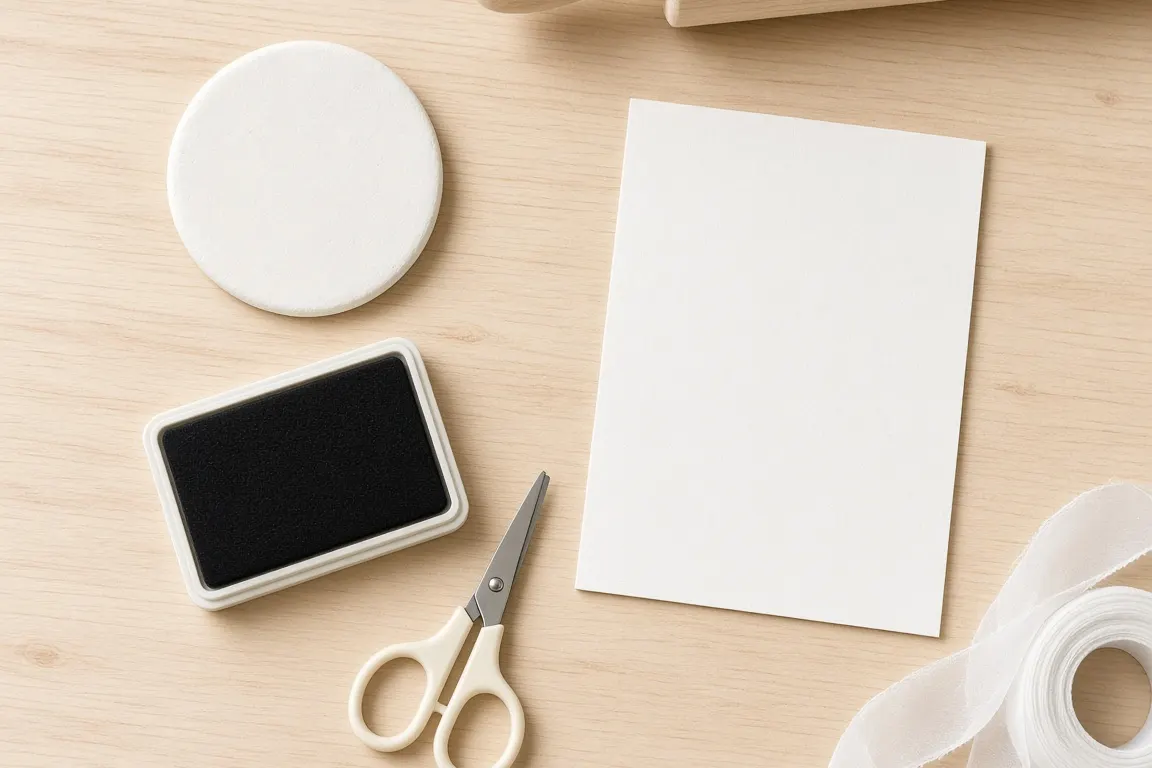
Costs are modest at the capture stage. By our estimate the median paw-print add-on at US crematories is ~$32[2], and one US network charges from $49 for ink up to $133 for a framed clay print with fur[3]. The materials guide sets those against metal and glass prices, and the paw print kit chooser suggests a method for your pet.
Free tool
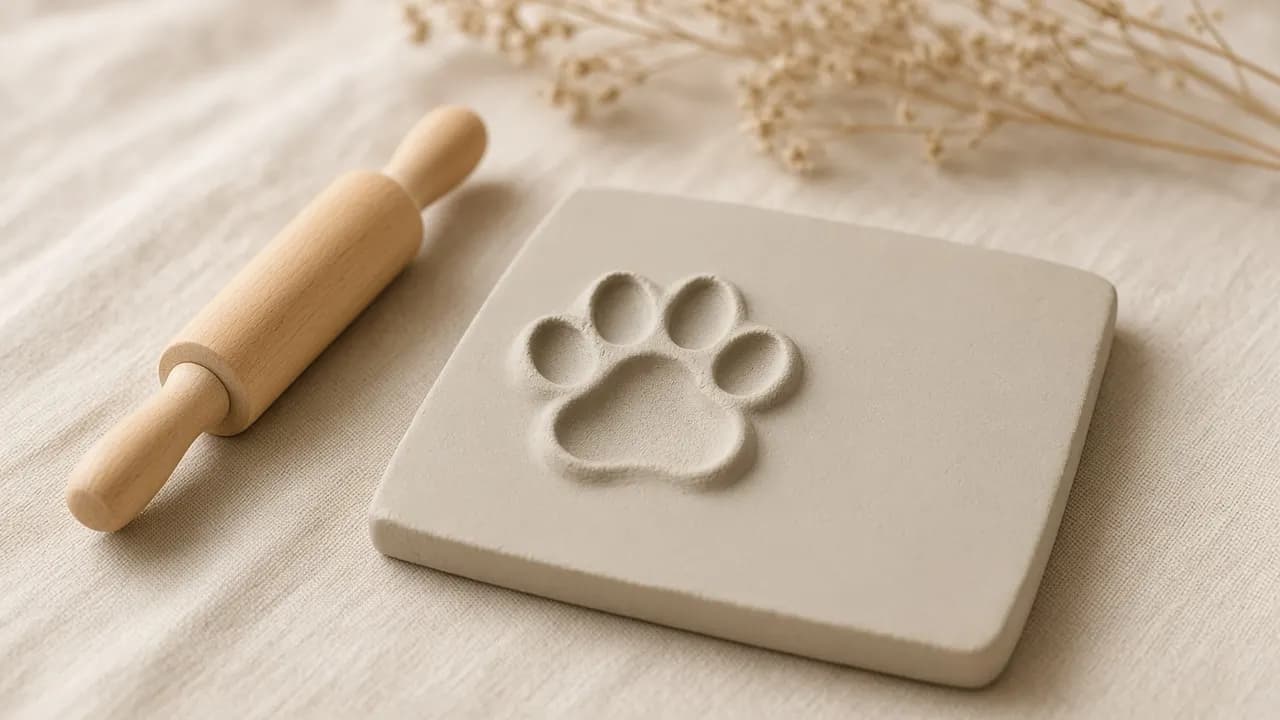
Paw print keepsake chooser
Match a print method to your pet's size, fur and the keepsake you want to keep.
Families
How can children be part of a paw print?
Many parents want help with this: 93.4%[4] of those in an RSPCA survey wanted better guidance on helping children through pet loss. Our children's guide suggests jobs matched to age, from pressing a toddler's hand into spare clay to letting a teenager take the print with an adult beside them.
It also covers the one material to avoid (salt dough, which the Merck Veterinary Manual lists among the causes of salt poisoning in pets) and gentle words for explaining what the print is for. If siblings each want their own keepsake, the ashes sharing planner shows how far one pet's ashes go across several small pieces.

Free tool
Ashes sharing planner
Split ashes fairly between family members, keepsake urns and jewelry.
Display
Where should a finished print live?
Heat, damp and sunlight are what damage prints, so the display guide starts with placement: inside walls, away from radiators and windowsills, behind UV-filtering glass for ink. Then it looks at pairing: your pet's old ID tag on a hook beside the frame, or a new one engraved with a name and a year.
Engraving is usually a small cost. One urn retailer says adding an engraved paw print or symbol to a pet urn typically costs $20–$35[5], and the guide gives equivalent figures for tags and garden stones. The memorial budget planner adds up a frame, tag and extras.
Our figures
Where do the figures in these guides come from?
Prices come from published price lists of named crematories, retailers and makers, and from national cost guides. Survey figures come from organizations such as the RSPCA and the UK Competition and Markets Authority. Where we've calculated something ourselves, such as a median across several providers, it's labeled as our estimate. Our research page explains the method, and our about page explains who we are.
We're an independent guide and request service. We don't take prints or run crematories. Many families simply never hear about their options: only 47%[6] of UK cremation buyers recalled being told about a range of choices in the Competition and Markets Authority's survey. Our services page and local pages show who can take or finish a print. If you'd like us to find who offers prints near you, send us a few details and we'll reply by email.

Reader polls
What would you choose?
Vote anonymously and see how other readers answered. The results are live counts from people who visit this site, so they show real opinions, not a scientific sample.
When did (or will) you take your pet's print?
Tap an answer to vote and see how others answered. Anonymous.
If you could keep one kind of print from your pet, which would it be?
Tap an answer to vote and see how others answered. Anonymous.
Which memorial feels most like your pet?
Tap an answer to vote and see how others answered. Anonymous.

Free tools to help you plan
Paw print keepsake chooser
Match a print method to your pet's size, fur and the keepsake you want to keep.
Memorial budget planner
Add up cremation, urn, keepsakes and a farewell so the total holds no surprises.
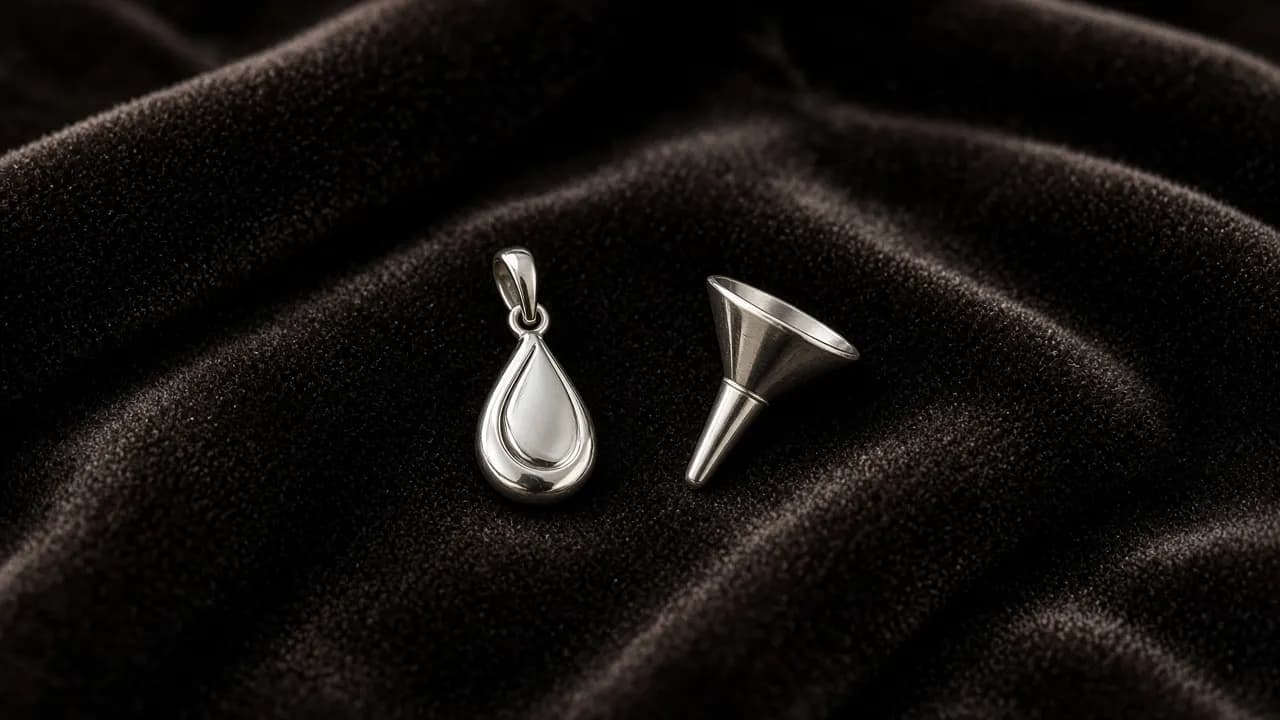
Jewelry ash capacity guide
How much ash fits in pendants, rings and glass, and how many pieces one pet can fill.
Questions people ask
What's the difference between the guides and the blog?
The guides each cover a whole topic from start to finish, such as timing or materials, and are meant to be read through. Blog articles answer one specific question each, like how to take a nose print or how to fix a cracked clay print, and give the answer in the first few lines. They link to each other throughout.
Which guide should I read if my pet is dying now?
Start with the timing guide. It explains what's possible at the final appointment, in the first hours afterwards and at the crematory, and what to say so the print isn't missed. If you only have a few minutes, ask your vet to take an ink or clay print and to note it on your pet's file.
Do the guides cover pets other than dogs and cats?
Yes. The timing and materials guides include notes on rabbits, guinea pigs, birds and horses, whose feet need different methods: very soft clay for furry soles, inkless paper for small birds, and paint on board or canvas for a hoof. The principles of timing and copying apply to every species.
Are the prices in the guides current?
They're taken from published price lists and cost guides we reviewed for 2025 and 2026, and each figure links to its source. Local prices vary, so treat them as a guide and ask providers for a written quote. Where we've calculated a figure ourselves, it's marked as our estimate.
Can you take the paw print for me?
No. We don't take prints or operate facilities. We're an independent guide and request service: tell us where you are and what you'd like, and we'll reply by email with vets, crematories and makers near you who take or finish prints.


Sources and our estimates
- [1] 75.4% of RSPCA pet-loss survey respondents experienced anticipatory grief before their pet died. RSPCA — Pet Loss Survey Results, 2026.
- [2] Paw-print add-ons at US crematories have a median price of about $32, from $10 to $76. Our estimate: median of [$10 clay (AGP), $15 laser engraving (AGP), $49 ink (Final Gift), $76 clay (Final Gift)]. How we calculate.
- [3] Final Gift charges $49 for ink paw prints, $76 for a clay or silver-clay paw print, $111 framed, and $133 framed with a fur clipping; a fur clipping alone costs $23. Final Gift Pet Memorial Center – Memorial Products, 2026.
- [4] 93.4% of parents in the RSPCA survey wanted better guidance on helping children through pet loss. RSPCA — Pet Loss Survey Results, 2026.
- [5] Adding an engraved paw print or symbol to a pet urn typically costs $20–$35. Memorials.com – Pet Urn Cost Guide, 2025.
- [6] Fewer than half (47%) of UK cremation buyers recalled being told about a range of options, including communal cremation or home burial. UK Competition and Markets Authority - Veterinary services for household pets, Provisional decision report Part A (Oct 2025), 2025.
Get paw print help near you
Tell us what you need and where you are. We'll reply by email with clear options and prices so you can decide in your own time.