How to display a paw print, and what to pair it with
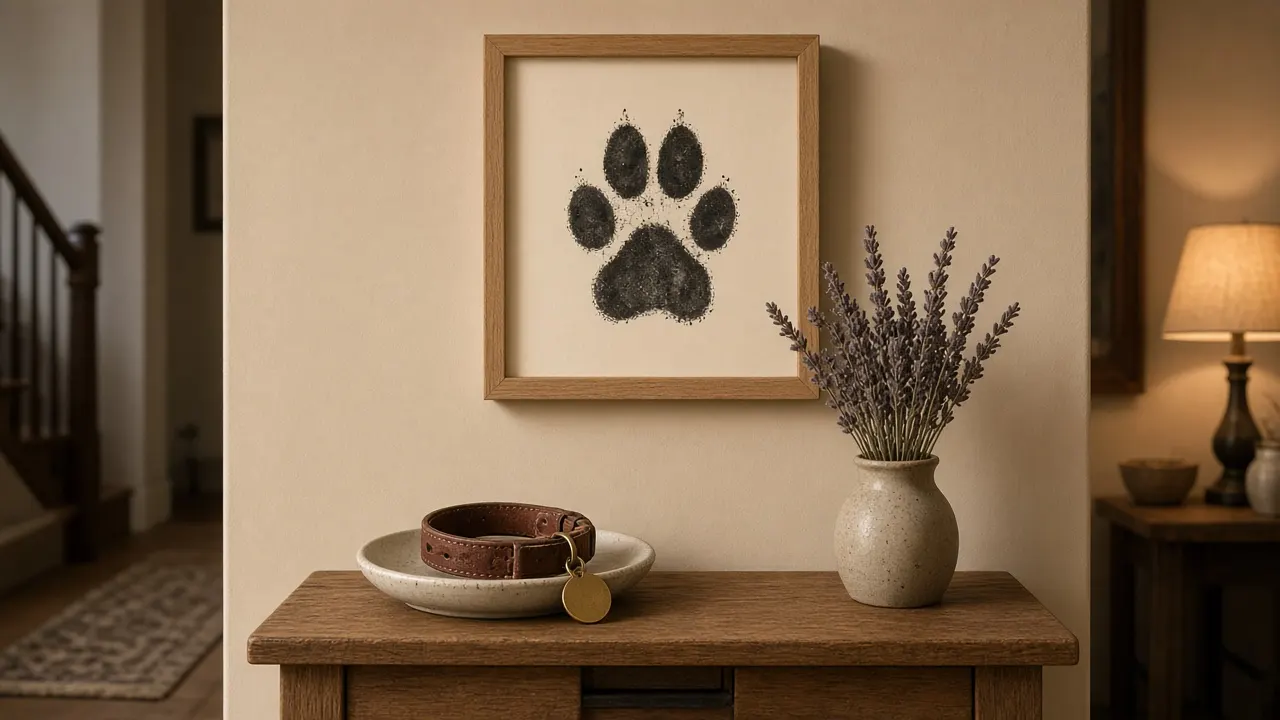
Keep a paw print out of direct sun, away from damp and at eye level where you'll actually see it; a deep frame or a small shelf stand does that for most prints. Pairing it with your pet's own ID tag, or a newly engraved one, turns a print into a small memorial with a name on it.
By the Paw Print Keepsakes & Memorial Impressions editorial team · Updated September 24, 2026 · 5 min read · Sources
- Frames, shelves, windows and gardens: what each does to a print
- What to engrave, and on which kind of tag
- Real prices for framing and engraving
The short answer
Where should you display a paw print?
Display it indoors, somewhere dry, out of direct sunlight and at a height you pass every day. A hallway wall, a bookshelf at eye level or a bedside table all work well. Avoid sunny windowsills, bathrooms, kitchens near the kettle and anywhere above a radiator, because heat, damp and ultraviolet light are what fade ink and crack air-dry clay. The National Archives makes the same point about displaying family papers and photos: originals last longest away from direct light and humidity.
The other question is how often you want to see it. Some people want the print where they'll pass it every morning; others find that too much in the first months and prefer a drawer or memory box, bringing it out on anniversaries. Both are normal, and the choice can change over time. Our poll results show where other readers chose to keep theirs.
Where would your pet's print live?
Tap an answer to vote and see how others answered. Anonymous.
Options
Frame, shelf, box or garden: which display suits your print?
The right display depends on what kind of print you have. A flat ink print wants a frame. A clay disc wants to be seen from the front with a little depth around it. A hoof print on canvas is large enough to hang like a painting.
| Display | Suits | Protects against | Watch out for |
|---|---|---|---|
| Standard picture frame | Ink and inkless prints | Dust, fingerprints | Sun fading unless the glass is UV-filtering |
| Deep box or shadow frame | Clay discs, prints with collar and photo | Knocks, dust | Heavy clay needs secure fixing inside |
| Plate stand on a shelf | Clay discs, ceramic tiles | Nothing, but easy to move | Dust and being knocked off |
| Memory box or drawer | Any print, especially early on | Light, dust | Out of sight, so less daily comfort |
| Garden stone or plaque | A copy, engraved from a scan | Weather, if made from stone | Never put the original outside |
Framing a crematory-taken clay print isn't expensive: one US cremation network charges $111 for a framed clay print, or $133 framed with a fur clipping[1]. A local framer can also mount a print you took yourself. If you'd like to build a frame with a collar and photo yourself, our step-by-step article on building a memory frame around a print shows how.
Protection
How do you stop a displayed print from fading or cracking?
Ask a framer for UV-filtering glass or acrylic and an acid-free mount. Ordinary card slowly yellows and ordinary glass lets through the light that fades ink. For clay, seal the surface before framing and leave a small air gap so the clay isn't pressed against the glass, where condensation can collect. That matches the Library of Congress's advice to use acid- and lignin-free mats and folders and keep light exposure low.
- Hang prints on inside walls rather than cold outside walls, which can be damp.
- Keep clay discs off windowsills; a sunny ledge can dry and crack them further.
- Scan or photograph the print before it goes behind glass, and keep the file safe.
- Dust clay with a soft, dry brush; never wipe it with a wet cloth.
Our guide to caring for ink and clay prints covers repairs, humidity and what to do if a print has already cracked.
Copies
Can you display the same print in more than one place?
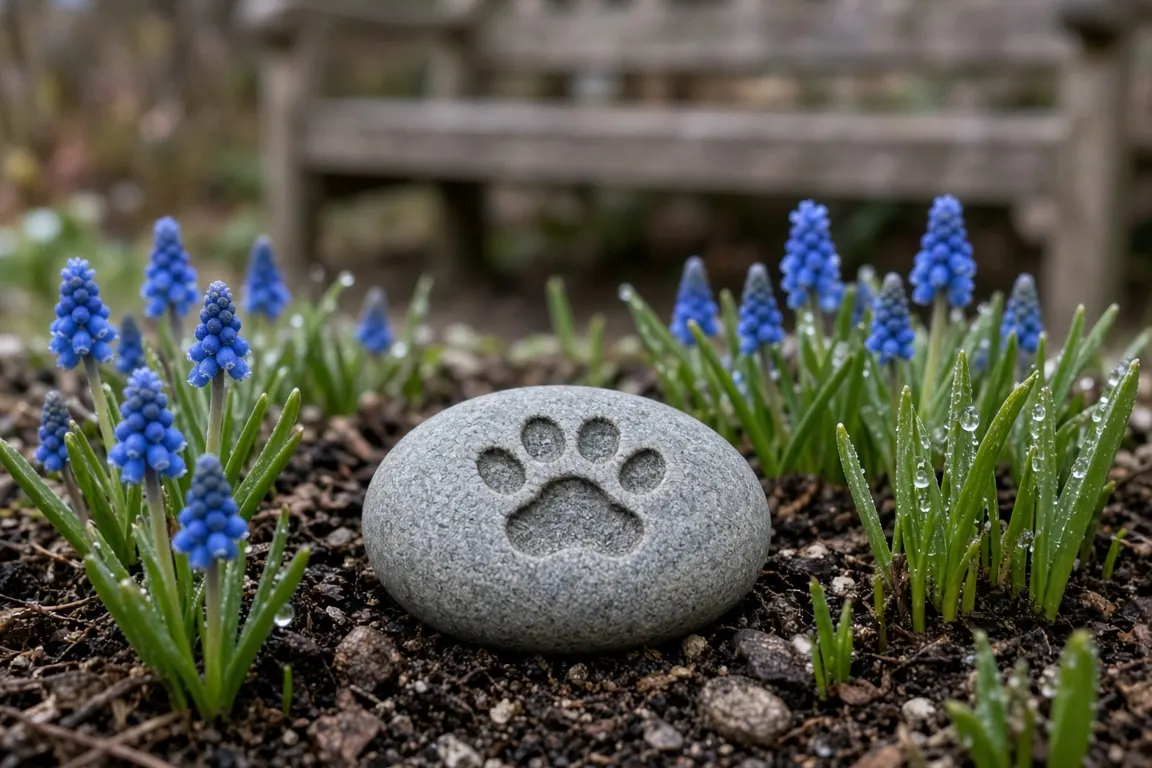
Yes, and it's often the kindest way to share one print across a family. The original stays safe at home, and copies go wherever they're wanted: a framed scan for a grown-up child, an engraved stone in the garden, a pendant for the person who walked the dog every morning. People like these personal touches: 51% of pet owners in one market report said they were interested in personalized memorials[5].
Outdoor pieces should always be copies. One seller's engraved natural-stone pet memorials sell for $38–$115[6], and one large retailer's engraved pet garden stones start from $38.95[7]. A photo-frame urn, which costs about $65–$350[8] in one price survey, is another way to keep a print, a photo and the ashes together in one place. By our estimate, the median starting price across three US sellers is ~$39[9], usually for a small 6 to 7 inch stone.
Free tool
Memorial budget planner
Add up cremation, urn, keepsakes and a farewell so the total holds no surprises.
The memorial budget planner helps you add up a frame, a tag and a garden stone before you order anything, and our services page explains who does each job.
Arranging
How do you make a small memorial corner that doesn't feel like a shrine?
Keep it to three things, and let one of them be ordinary. A framed print, a tag on a hook and a favorite toy on the shelf below feels like part of the home. Add a photo if you like, but choose one where your pet looks like themselves: mid-yawn, muddy, asleep on the wrong chair.
Place it where the pet used to be. The spot by the back door where the dog waited, the windowsill the cat claimed (with the print in a frame, not on the sill), the hallway where the lead used to hang. If you still need to take the print itself, the paw print kit chooser and our print window timing guide will help. If you'd like us to find a local framer or engraver, send a quick request. You can also browse our local pages for makers by city.
The memorial corners people keep for years are small enough to walk past and big enough to stop at.

Reader polls
What would you choose?
Vote anonymously and see how other readers answered. The results are live counts from people who visit this site, so they show real opinions, not a scientific sample.
Where would your pet's print live?
Tap an answer to vote and see how others answered. Anonymous.
What personal touch matters most on a memorial?
Tap an answer to vote and see how others answered. Anonymous.
Do you keep more than one memorial for the same pet?
Tap an answer to vote and see how others answered. Anonymous.

Questions people ask
Should a clay paw print be framed behind glass?
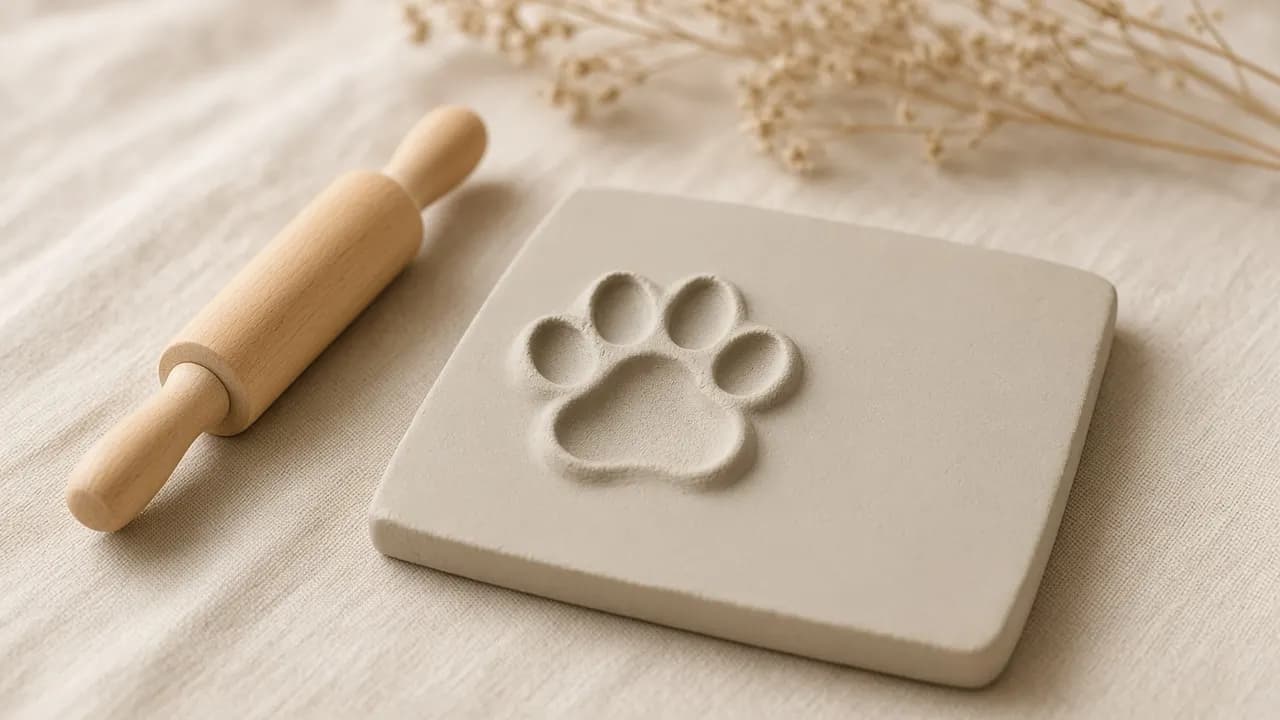
A deep box frame with glass protects clay from dust and knocks, but leave an air gap so the clay doesn't touch the glass. Seal the clay first and hang it on an inside wall away from radiators and bathrooms. If you'd rather hold it sometimes, a plate stand on a bookshelf works well too.
Can I put the original paw print in the garden?
It's safer not to. Rain, frost and sun will crack air-dry clay and fade ink within a season. Scan the print and have it engraved onto a stone, slate or metal plaque for the garden instead. Keep the original indoors, where it's dry and can last for decades.
What should I engrave on a tag to go with the print?
Keep it short: your pet's name, the years or just the final year, and perhaps one line such as a nickname or "Always by the door". Small tags fit four or five words comfortably. If you want the paw print on the tag too, ask the engraver for a scan-based laser engraving on the reverse.
How much does it cost to frame a paw print?
A crematory may frame a clay print it took for you; one US network charges $111 framed, or $133 with a fur clipping. A local framer's price depends on size, glass and mount, so ask for UV-filtering glass and an acid-free mount in the quote. A shop-bought box frame is the cheaper option for ink prints.
Is it strange to keep the print in a drawer instead of on display?
Not at all. Some people find seeing the print every day comforting; others find it too raw at first and prefer to keep it in a memory box and bring it out on anniversaries. Both protect the print, and many families move it onto a wall months or years later, when it feels right.


Sources and our estimates
- [1] Final Gift charges $49 for ink paw prints, $76 for a clay or silver-clay paw print, $111 framed, and $133 framed with a fur clipping; a fur clipping alone costs $23. Final Gift Pet Memorial Center – Memorial Products, 2026.
- [2] Urn engraving averages around $50, according to a TriGard reference cited by Funeral.com. Funeral.com – How Much Do Cremation Urns Cost in 2025, 2025.
- [3] Simple name-only engraving on a pet urn typically adds $15–$25; name plus dates adds $25–$40. Memorials.com – Pet Urn Cost Guide, 2025.
- [4] Adding an engraved paw print or symbol to a pet urn typically costs $20–$35. Memorials.com – Pet Urn Cost Guide, 2025.
- [5] Astute Analytica reports 51% of pet owners are interested in personalized memorials and 70% consider memorialization significant. Astute Analytica via GlobeNewswire — Global Pet Preservation Services Market to Hit USD 112.7 Million by 2032 (Apr 2, 2024), 2024.
- [6] Adirondack Stone Works sells engraved natural-stone pet memorials from $38 (6–7 inch mini) to $115 (13–14 inch large), with 1–4 lines of text included. Adirondack Stone Works Pet Memorials, 2026.
- [7] Memorials.com's engraved pet garden stones start at $38.95, cultured-stone markers at $87.95 and flat granite markers at $157.95. Memorials.com – Pet Memorial Stones, 2026.
- [8] Photo-frame urns cost about $65–$350, per U.S. Funerals Online figures cited by Funeral.com. Funeral.com – How Much Do Cremation Urns Cost in 2025, 2025.
- [9] Engraved pet garden stones start at about $39 at the median of three US sellers. Our estimate: median of starting prices [$38 Adirondack, $38.95 Memorials.com, $89.99 Comfort Co.]. How we calculate.
Get framing and engraving options near you
Tell us what you need and where you are. We'll reply by email with clear options and prices so you can decide in your own time.