A paw print to keep, in Palmer
Roughly 210 dogs and cats die in Palmer each year, by our estimate, and many owners only think of a paw print afterwards. Here's how to make sure yours is taken in time.
- Nose prints and fur clippings too
- Keep a scan so the original stays home
- Options that serve Palmer
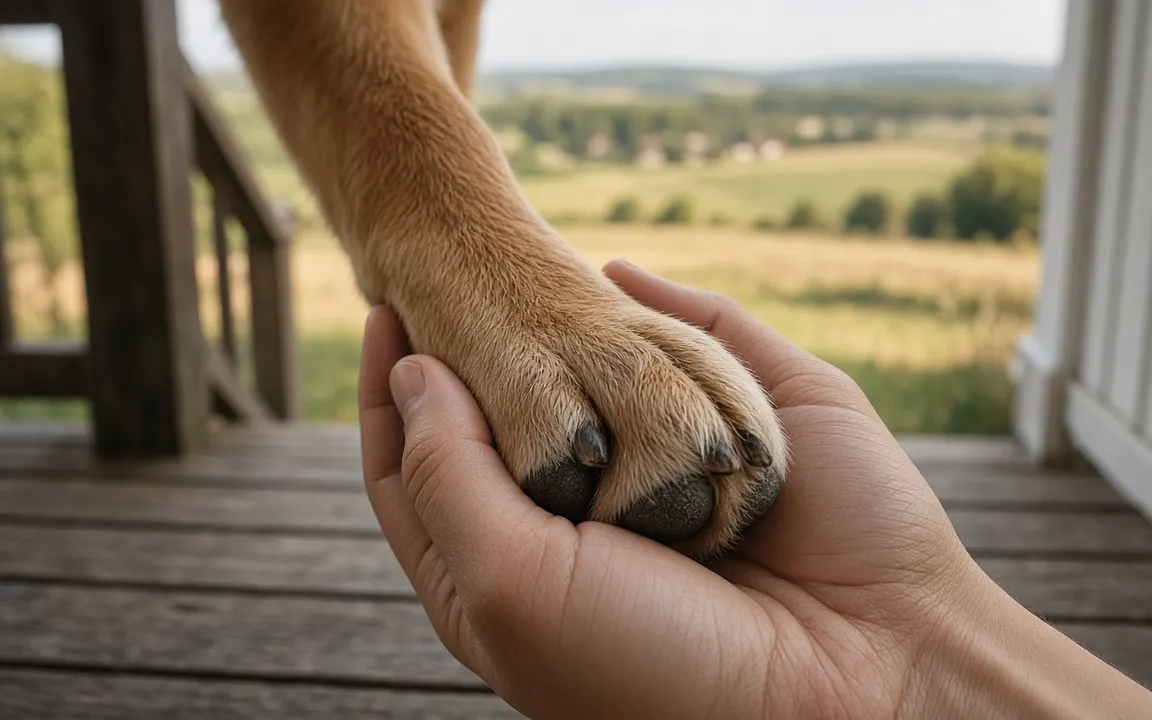
Palmer, Alaska
Arranging a paw print around Palmer
The Matanuska Valley's mix of homestead history and modern families shows in how people remember animals here: a handmade wooden marker, a stone engraved with a name, an urn on the mantel, or a pendant with a little ash inside. There is no right answer. Choose something you'll still want to look at in ten years, and don't let anyone rush you.
In a farm town like Palmer, many families mark a pet's resting place on their own land, with a stone at the edge of a field or a tree planted near the house. That work waits for thaw, usually May or June. Ashes keep indefinitely in a sealed urn, so there is time to decide. If you might move, keep a small portion in a keepsake so you can take it with you.
If your pet will travel to a crematory near Anchorage, the journey can take a day or two, depending on collection schedules. Many crematories offer a print at intake, which is a useful backup. But if you can, take your own before your pet leaves Palmer. That way you have it in your hands and don't depend on anyone else remembering.
Palmer's population is around 6,710, the 8th-largest of the 10 Alaska communities we cover. Anchorage, roughly 37 miles off, is the closest larger centre, and a share of the providers who cover Palmer run from there.
Our pages for Wasilla (11 miles), Anchorage (37 miles, a larger centre) and Kenai (100 miles) describe the same choices from those towns' point of view, and the providers overlap, so a quote from one often covers Palmer as well.
Our estimate
2,450
Palmer: dog- or cat-owning households, our estimate
How we calculated this
6,710 ÷ 2.5 = 2,684 households; × 53% (dog) + 39% (cat) = 2,450. A household with several pets counts once.
Our estimate
210
dog and cat deaths per year in Palmer, our estimate
How we calculated this
2,450 dog/cat-owning homes ÷ average lifespan (dog: 12.69 yrs + cat: 11.18 yrs) ≈ 210 a year. The real figure is unlikely to be lower.
53%[1]
53% of US households own a dog, which is about 71 million households.
12.69 years[2]
US dogs have an average life expectancy at birth of 12.69 years.
39%[3]
39% of US households own a cat, which is about 53 million households.
11.18 years[4]
US cats seen at Banfield hospitals have an average life expectancy at birth of 11.18 years.
None of the figures on this this page are ours alone: they rest on Montoya et al. 2023, Frontiers in Veterinary Science and American Pet Products Association (APPA) 2025 State of the Industry.
How Alaska thinks about cremation, and why prints matter
Cremation accounts for about 74.1%[5] of human deaths in Alaska, so many households already have a shelf or cabinet where family ashes and photos sit. A pet's print tends to join that shelf. That's worth knowing before you choose a format: a clay disc needs a small stand, an ink print suits a frame the same size as your photos, and a print engraved straight onto the urn saves space altogether.
NFDA 2024 Cremation & Burial Report state projections (via Occasional Sage) (2024) is where the Alaska figure comes from. It counts people; we use it because attitudes to cremating a pet in Palmer tend to follow attitudes to cremation generally.
Weather in Palmer and your pet's print
Plaster and cold don't mix well. Plaster sets more slowly in a cold room, and if the water in it freezes before it cures, the cast turns chalky and crumbles. In January, February, March, April, October, November and December, mix plaster with lukewarm water, let it set somewhere warm indoors and never leave a curing cast in a car, porch or shed overnight. The same goes for air-dry clay.
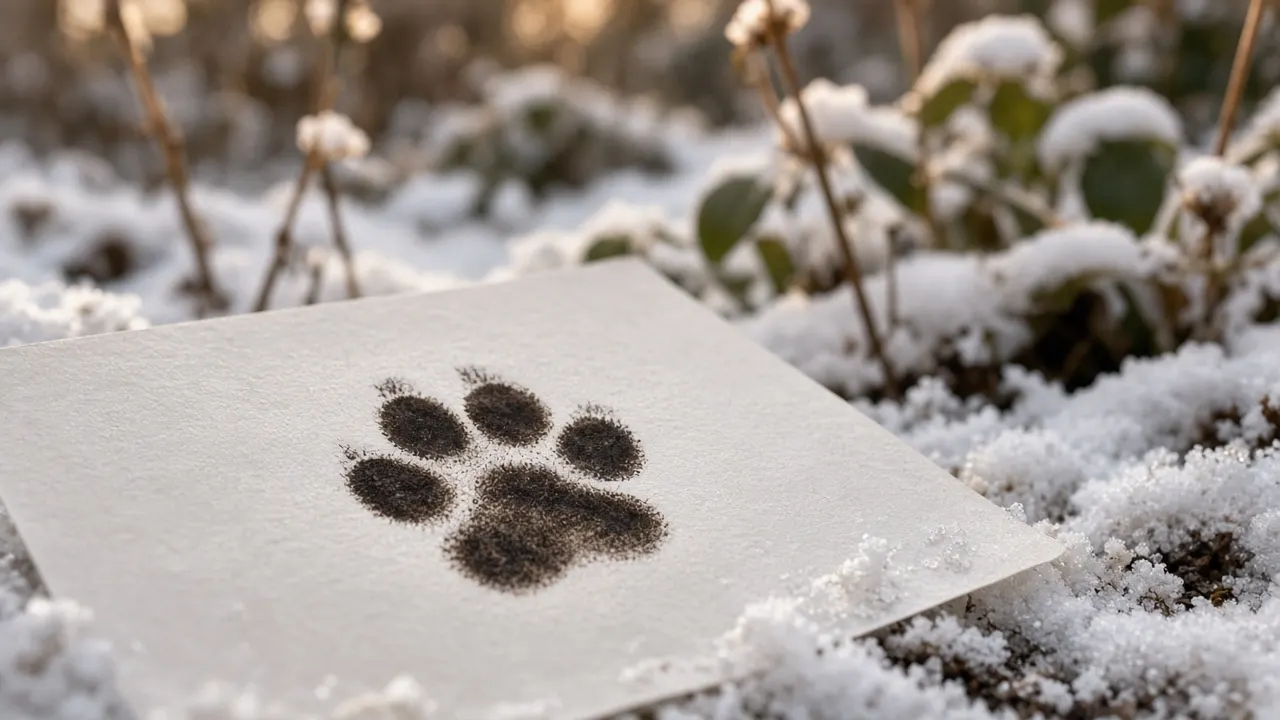
Winter in Palmer offers a keepsake many owners overlook: your pet's tracks in fresh snow. On a still morning in January, a line of paw prints across the yard can be photographed from directly above and later engraved or printed, much like an ink print. It's no replacement for a proper impression, but for an older dog who loves the snow, it's a lovely record of an ordinary day.
Where the money goes: the print, then the finishing
By our estimate, around 765,000 US families a year[6] are open to a personalized pet keepsake, so providers in Palmer are used to the question. The cheapest route is a home print, which costs only clay and a card. The next step up is a crematory add-on: by our estimate the median is about $32[7], and a clay paw impression can cost as little as $10[8]. Framing, engraving and silver are where totals climb.
The Alaska price table breaks costs down by product; our services page explains what sits behind each line.
Free tool
Memorial budget planner
Add up cremation, urn, keepsakes and a farewell so the total holds no surprises.
Burial, scattering and prints in Alaska
Rules in Alaska mostly cover the practical side of a pet's death: where a body can be buried, how deep, and where ashes may be scattered. None of it stops you taking a print. It's worth knowing, though, because a print set into a stone often goes where the burial or ashes go, and a landlord or homeowners' association can have its own say.
To find your county or city office in Alaska, start with the official Alaska local government directory.
Start with the Alaska rules, which cover burial, scattering and oversight for the whole state, and treat Palmer's local ordinances as a possible extra layer.
How to make sure a print is taken in time
- If your pet dies unexpectedly at the clinic, ask for a few minutes alone with them before you go. Staff will almost always allow this, and many can fetch a print kit for you there and then.
- Say exactly what you want: ink, clay, a nose print, or every one of them, plus the number of copies.
- If you can't face doing it yourself, ask a nurse or technician to take it while you wait outside, and to show it to you before you go.
- Get the crematory's name and your pet's reference number on paper from reception before you leave.
- If no print was taken, call the crematory first thing the next morning and ask for one at intake.
- Leave the urn and the other extras for later. The print is the only decision that can't wait.
Turning a print into something lasting
Palmer's winds, deep winter cold and spring meltwater all take a toll on outdoor memorials. Heavy natural stone and bronze last far longer than resin or painted concrete, and setting a marker low, on gravel, keeps it from tipping with frost heave. Palmer gardeners know the short, bright summer grows remarkable plants; a memorial bed of perennials hardy to the valley is another option.
use the free tools before you ring anyone, or see what other families chose in the poll results, there are guides for the big decisions and articles for the details, Every option Palmer families choose between is on the services page. Close to Palmer we also cover Ketchikan, Anchorage, Juneau and Wasilla; the full list for Alaska and for the United States is a click away.

Reader polls
What would you choose?
Vote anonymously and see how other readers answered. The results are live counts from people who visit this site, so they show real opinions, not a scientific sample.
When did (or will) you take your pet's print?
Tap an answer to vote and see how others answered. Anonymous.
Where would your pet's print live?
Tap an answer to vote and see how others answered. Anonymous.
If you had to decide today, which aftercare would you choose for your pet?
Tap an answer to vote and see how others answered. Anonymous.

Free tools to help you plan
Memorial budget planner
Add up cremation, urn, keepsakes and a farewell so the total holds no surprises.
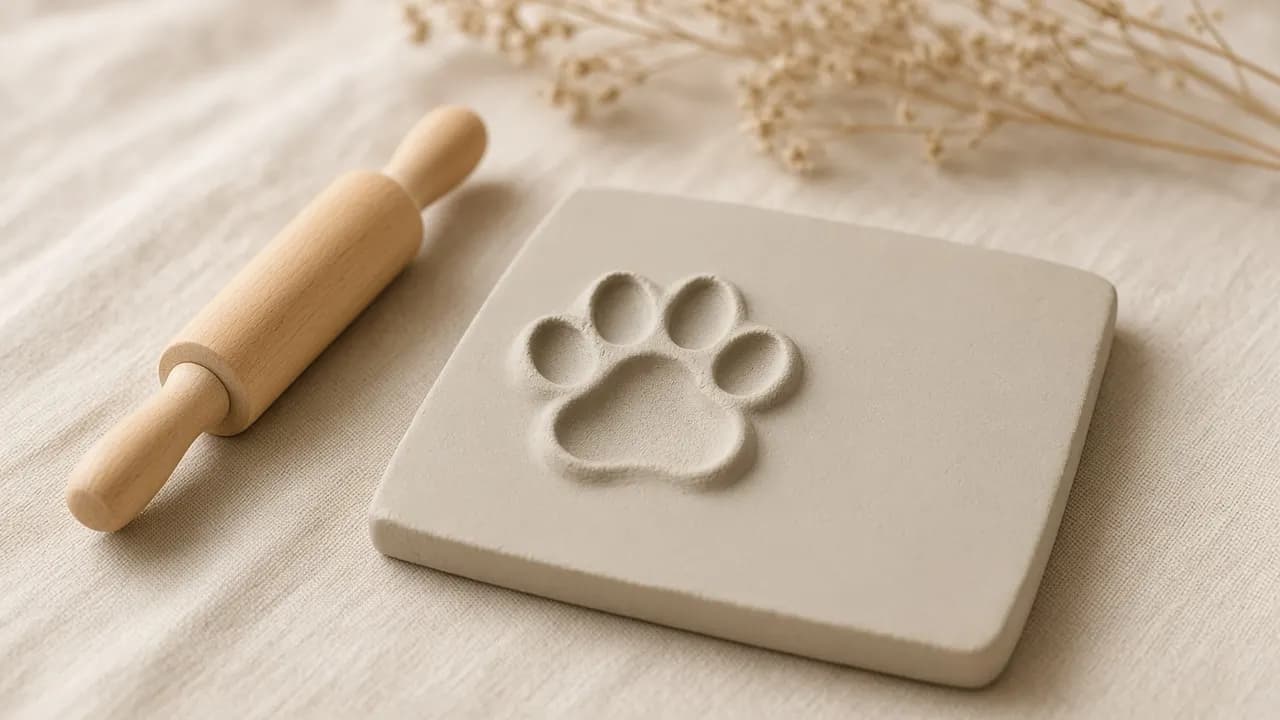
Paw print keepsake chooser
Match a print method to your pet's size, fur and the keepsake you want to keep.
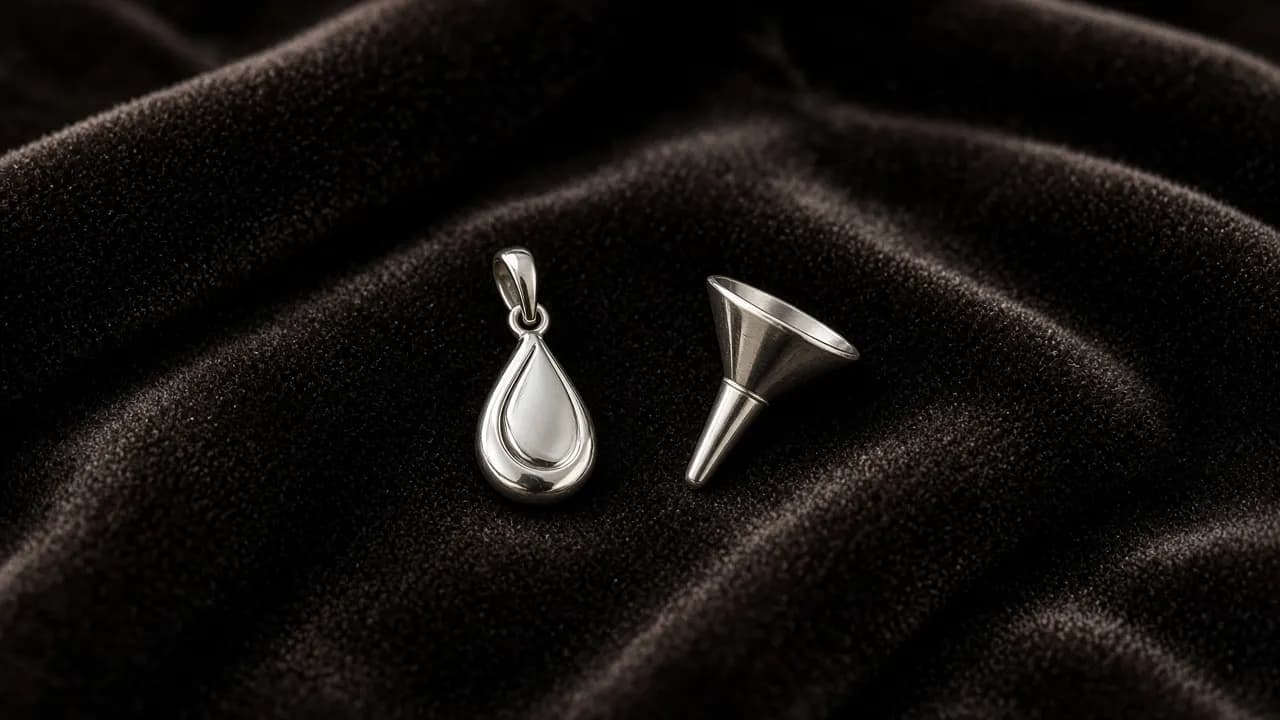
Jewelry ash capacity guide
How much ash fits in pendants, rings and glass, and how many pieces one pet can fill.
Questions people ask
Does the Palmer climate change what I should do first?
Only the timing. In July, with highs near 66°F, cool the body and book collection the same day. In January, February, March, April, October, November and December, when lows sit below freezing, a home burial may have to wait for a thaw, so cremation with ashes returned keeps your options open.
Why does the Palmer page quote a human cremation rate?
Because it is the best local signal we have. NFDA 2024 Cremation & Burial Report state projections (via Occasional Sage) (2024) reports about 74.1%[5] of Alaska residents are cremated. There is no official pet equivalent, and inventing one would be worse than quoting a real, clearly labelled number.
Can a provider from a neighbouring town collect from Palmer?
Usually yes. Wasilla is about 11 miles away, Anchorage is about 37 miles away and Kenai is about 100 miles away, all inside a normal collection radius. Get the mileage written into the quote so there is no surprise on the day.
Where are the providers that serve Palmer actually based?
Some are local, and some run from Anchorage, about 37 miles away. That is normal for a town this size. What matters is the collection time they quote for Palmer and whether the drive is priced into the total, so ask both up front.
Will my vet or crematory take a paw print before cremation?
Most will if asked, and many include a clay or ink print in the package. But requests can be missed on a busy day, especially at emergency clinics. Mention it when you book, ask for it to be written on the aftercare form and ask whether it comes back to you that day or with the ashes. Once your pet has been cremated, the chance is gone.
Who else can take a paw print if my vet in Palmer doesn't?
Several people can. The crematory that serves Palmer normally makes one when your pet arrives. A mobile or home-visit vet may carry a kit. A groomer who knows your pet can tidy the paw fur and help you take one on a good day. And you can do it yourself with air-dry clay and a pet-safe ink pad from a craft store. What matters is that it happens before cremation or burial.


Sources and our estimates
- [1] 53% of US households own a dog, which is about 71 million households. American Pet Products Association (APPA) 2025 State of the Industry, 2025.
- [2] US dogs have an average life expectancy at birth of 12.69 years. Montoya et al. 2023, Frontiers in Veterinary Science - Banfield Pet Hospital life expectancy tables (13.3 million dogs, 2.4 million cats, 2013-2019), 2023.
- [3] 39% of US households own a cat, which is about 53 million households. American Pet Products Association (APPA) 2025 State of the Industry, 2025.
- [4] US cats seen at Banfield hospitals have an average life expectancy at birth of 11.18 years. Montoya et al. 2023, Frontiers in Veterinary Science - Banfield Pet Hospital life expectancy tables (13.3 million dogs, 2.4 million cats, 2013-2019), 2023.
- [5] The NFDA projected Alaska's cremation rate at 74.1% for 2024. NFDA 2024 Cremation & Burial Report state projections (via Occasional Sage), 2024.
- [6] Around 765,000 U.S. families a year are likely open to a personalized pet keepsake. Our estimate: 1.5M pet cremations x 51% interest in personalized memorials. How we calculate.
- [7] Paw-print add-ons at US crematories have a median price of about $32, from $10 to $76. Our estimate: median of [$10 clay (AGP), $15 laser engraving (AGP), $49 ink (Final Gift), $76 clay (Final Gift)]. How we calculate.
- [8] Memorial add-ons at A Greener Place: $15 laser-engraved paw print, $10 clay paw impression, $10 nose print, $5 fur clipping. A Greener Place Pet Aquamation – Pricing, 2026.
- [9] Published ashes-return times across the network's markets range from same-day (paid express) to about 4 weeks; a conservative typical window is 3-14 days. Our estimate: min/max across sources: Lambeth 3 days; US 5-10 days; RSPCA QLD within 14 days; AniCura Sweden 2-4 weeks. How we calculate.
Get paw print options in Palmer
Tell us what you need and where you are. We'll reply by email with clear options and prices so you can decide in your own time.