How much ash fits behind a paw print pendant?
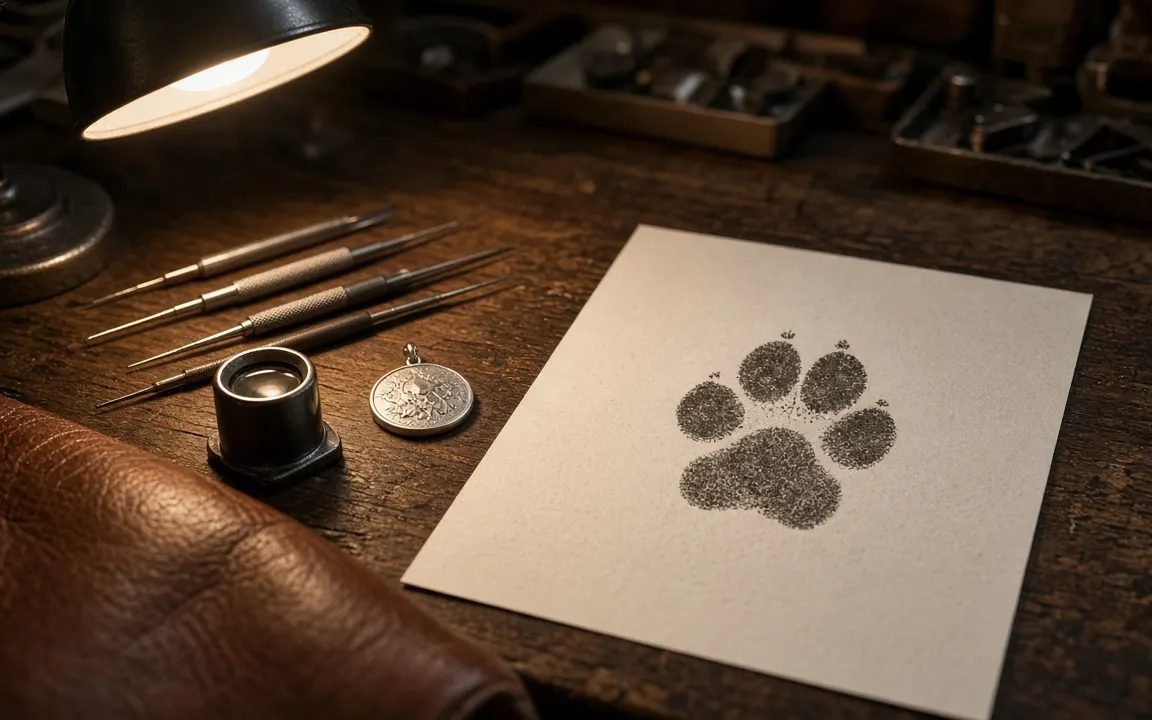
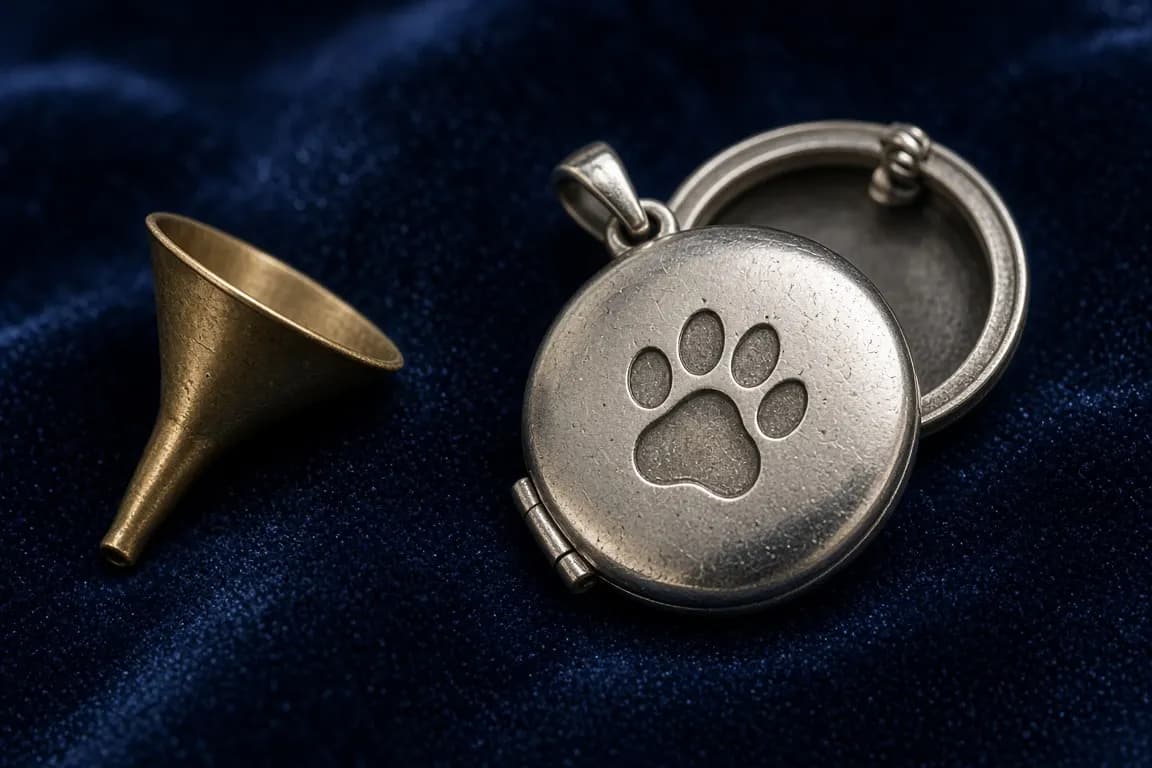
Many print pendants hide a tiny chamber for ashes behind the engraving. Cremated remains weigh about 3-5% of body weight[1], and this guide turns your pet's weight into a count of pieces you could fill.
- Pendants, rings, glass charms and keepsake urns
- Works from weight or a known ash volume
- Honest notes for very small pets
Jewelry ash capacity guide
Cremation jewelry holds only a tiny amount. See how much each piece takes and how many pieces your pet's ashes could fill.
Your pieces use
0.1 cu in
1.6 mL, about 0.3 teaspoons
Left over
50 cu in
of about 50 cu in
| Piece | Holds | One pet could fill |
|---|---|---|
| Pendantabout a pinch | 0.05 cu in0.82 mL | 1,000 |
| Ringa few grains to a small pinch | 0.02 cu in0.33 mL | 2,500 |
| Glass bead or charmabout a third of a teaspoon | 0.1 cu in1.64 mL | 500 |
| Keepsake urnabout 10 teaspoons | 3 cu in49.16 mL | 16 |
Capacities are typical; every design differs, so check the product. For most pets, even after filling several pieces of jewelry, almost all of your pet's ashes remain for an urn.
Source: Embrace Pet Insurance - Bury or Cremate Your Dog? Costs, Pros & Cons; Our estimate. piece capacities are typical sizes
Next step: Ask a local provider about filling jewelry for you →
Using the guide
How to use the capacity guide
Choose whether to start from your pet's weight or from a volume of ashes you already know. Most people use weight; if a crematory has told you the volume, or you've already set some aside, enter that instead. Then add how many pendants, rings, glass beads and keepsake urns you're considering.
The guide shows how much those pieces use, what's left over, and how many of each one pet's ashes could fill in total. For most print jewelry the answer is reassuring: a pendant with an engraved paw or nose print on the front takes only a pinch behind it. If you haven't got a clear print yet, start with the paw print kit chooser.
The maths
How the guide calculates capacity
It uses the urn industry's rule of thumb of about one cubic inch of ashes per pound of body weight. That's a volume rule, and it sits comfortably with the weight rule, given in one pet insurer's guide, that ashes are about 3 to 5 percent of body weight[1]. For comparison, a study of 100 human cremations found remains averaged 3.5%[2] of adult body weight. Here's what it gives for two common pets:
12 cu in (cat); 70 cu in (dog)[3]
| Piece | Holds about | In everyday terms |
|---|---|---|
| Ring | 0.02 cu in | A few grains |
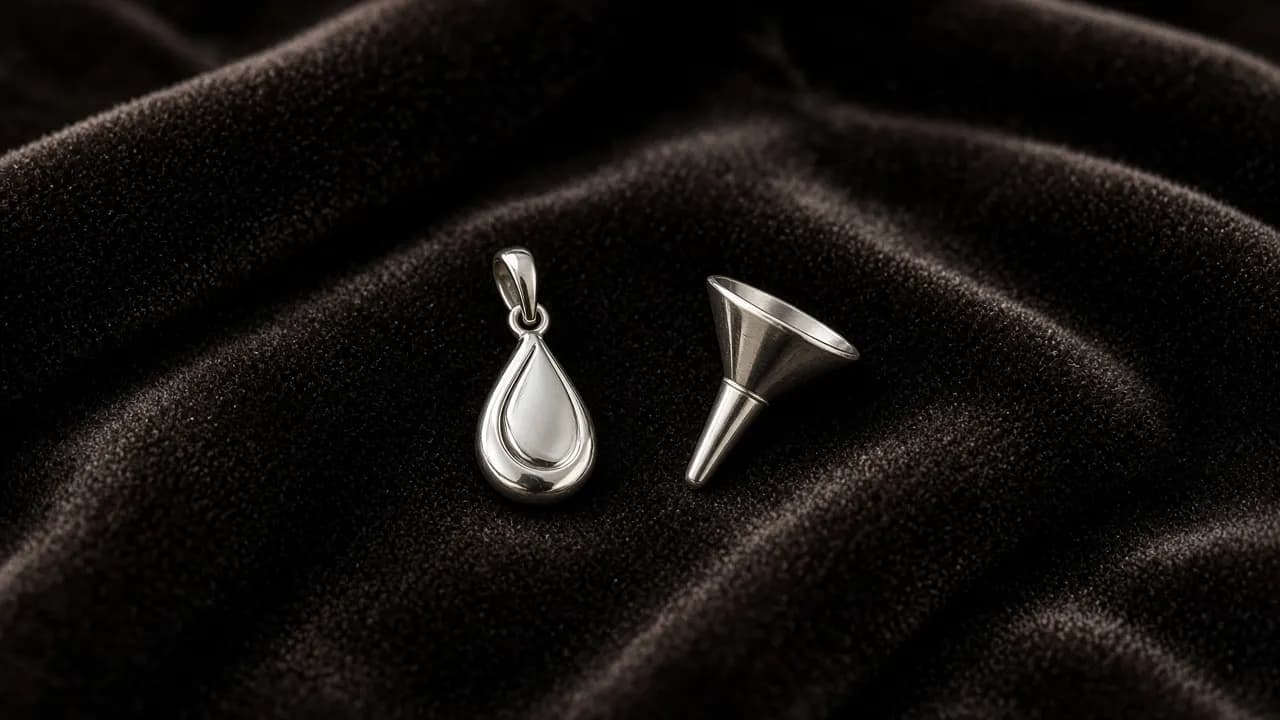
| Pendant | 0.05 cu in | A pinch |
| Glass bead or charm | 0.1 cu in | About a third of a teaspoon |
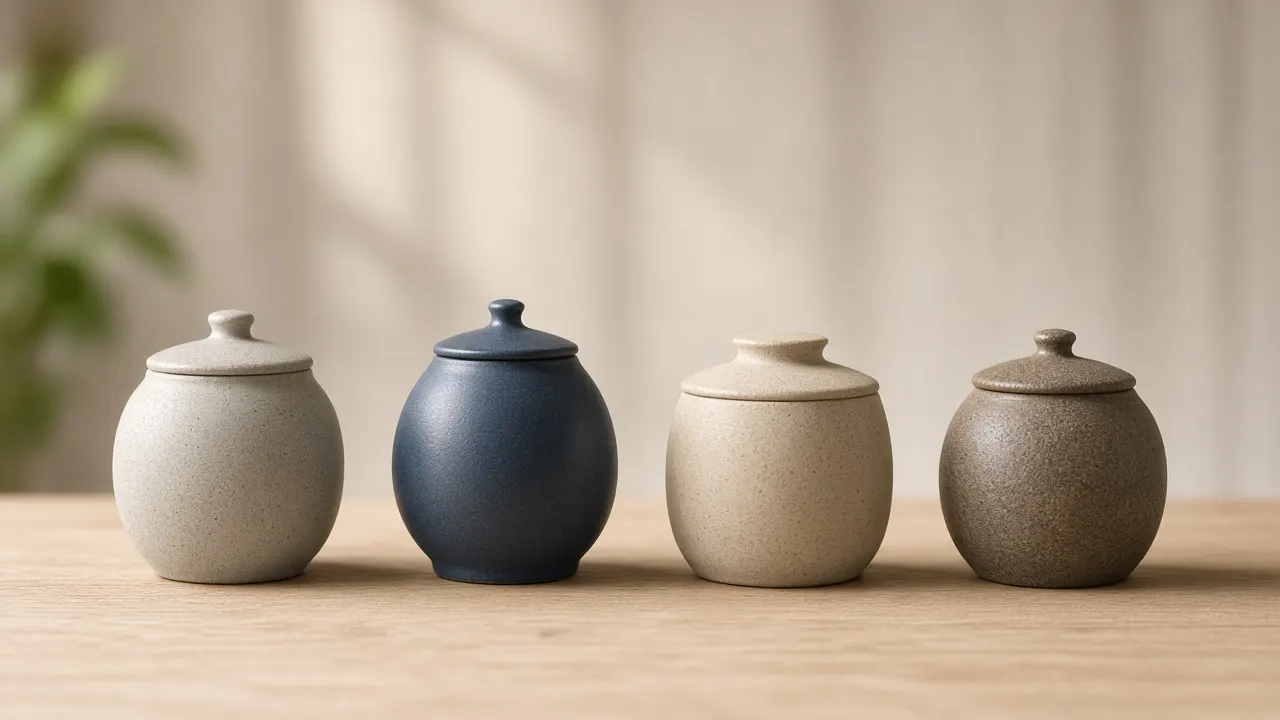
| Keepsake urn | 3 cu in | About ten teaspoons |
Real pieces differ, so treat these as typical sizes and check the product you choose. Engraved print pendants with a chamber usually sit at or below the pendant figure, because the engraving plate takes up some depth.
Worked examples
Worked examples: a Labrador, a cat and a budgie
A 70 lb Labrador. About 70 cubic inches of ashes. Four nose-print pendants for the family use 0.2 cubic inches between them, leaving almost everything for the main urn. You could fill a keepsake urn for each of four children and still have well over three-quarters left.
A 12 lb cat. About 12 cubic inches. Two paw-print pendants and a ring use under an eighth of a cubic inch. A single keepsake urn would take about a quarter, which is worth knowing if several people want one.
A budgie. Here the rule of thumb reaches its limits. A budgie weighs a few dozen grams, so the ashes returned may be only a small amount, and some providers return little that's visible. Parakeets are common, too: 28%[4] of US bird-owning households keep one, according to the American Pet Products Association. For tiny pets, a print-engraved pendant with no ash chamber, or a single glass bead, is often the gentler plan.
Reading the result
What the numbers mean for your plans
If the "left over" figure is large, jewelry won't meaningfully change what goes in the urn, and you can plan pieces for everyone who wants one. If it says "not enough", it's almost always because of keepsake urns rather than jewelry: trim the number of keepsake urns and try again.
Jewelry and urns are a big part of the memorial market; one industry report says pet urns alone made up 40%+[5] of pet memorial product revenue in 2023. Personal pieces matter to people, too: one market report put interest in personalized memorials at about half of owners. The poll results show where other readers keep their own prints, from walls to pendants.
51% / 70%[6]
Where would your pet's print live?
Tap an answer to vote and see how others answered. Anonymous.
Before you order
Getting a print that engraves cleanly at pendant size
A pendant is small, often around an inch across, so the print gets shrunk a long way. Pad shapes survive that well; fine smudges and fur texture don't. Nose prints often hold up especially well at this size because the ridge pattern is bold and even.
Take several flat prints and send the crispest one, scanned at high resolution or photographed straight down in soft daylight with no shadow. Keep the original safe and sealed; our guide to caring for ink and clay prints covers storage. If the print is in clay, a raking side-light photo can bring out the pads for the engraver to trace.
Honest limits
What the guide can't tell you
It can't tell you how a particular maker fills a piece, whether the seal is waterproof, or how clear your print will look once it's scaled down to pendant size. Ask for a digital proof of the engraving before anything is cut, and send the crispest scan you have. Our display and tag guide covers engraving choices. Our services page describes the kinds of makers who engrave from prints.
It also uses averages. Bone density, cremation method and how finely the ashes are processed all change the real volume a little. If exact numbers matter, ask the crematory for the volume they returned.
Next steps
From numbers to a finished piece
Once you know how many pieces you want, the ashes sharing planner helps you record who gets what, and the memorial budget planner adds the jewelry to the rest of your costs using the quotes you gather.
If you'd like help finding an engraver or jeweler who works from paw and nose prints, send us a note and we'll reply by email with makers to consider. You can also check our local pages for what's offered near you.

Reader polls
What would you choose?
Vote anonymously and see how other readers answered. The results are live counts from people who visit this site, so they show real opinions, not a scientific sample.
Where would your pet's print live?
Tap an answer to vote and see how others answered. Anonymous.
How many copies of the print would your family want?
Tap an answer to vote and see how others answered. Anonymous.
Do you keep more than one memorial for the same pet?
Tap an answer to vote and see how others answered. Anonymous.

Free tools to help you plan
Jewelry ash capacity guide
How much ash fits in pendants, rings and glass, and how many pieces one pet can fill.
Ashes sharing planner
Split ashes fairly between family members, keepsake urns and jewelry.
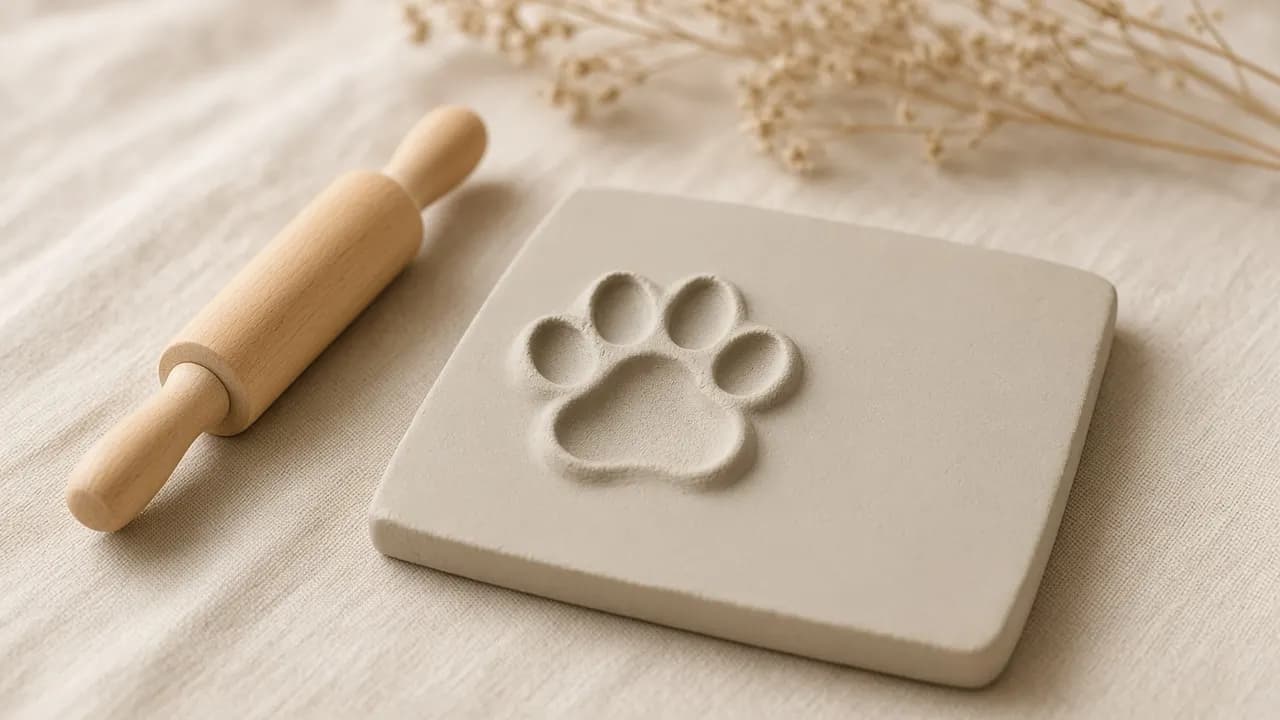
Paw print keepsake chooser
Match a print method to your pet's size, fur and the keepsake you want to keep.
Questions people ask
How much ash goes into a paw print pendant?
Typically about 0.05 cubic inches, which is roughly a pinch. Pendants with an engraved print plate on the front often hold slightly less, because the plate takes up some of the depth. Check the maker's stated capacity for the exact piece.
Will filling jewelry leave enough for an urn?
For almost every dog and cat, yes. A 12 lb cat produces around 12 cubic inches of ashes, and several pendants use only a fraction of one cubic inch. It's keepsake urns and scattering tubes that use noticeable amounts, not jewelry.
Can I have my pet's print engraved without adding ashes?
Of course. Many people prefer a solid pendant with the paw or nose print engraved on it and no chamber at all. It's simpler to wear, has no seal to worry about, and suits very small pets who leave little ash.
What if my pet was very small?
Tiny pets like budgies, hamsters and mice may return only a small amount of ash, and sometimes very little that's visible. A single glass bead or a print-engraved pendant without ashes is often a better fit. Ask the crematory what to expect before you order jewelry.


Sources and our estimates
- [1] Embrace notes cremated remains typically weigh about 3-5% of the pet's original body weight. Embrace Pet Insurance - Bury or Cremate Your Dog? Costs, Pros & Cons, 2025.
- [2] In a study of 100 commercial human cremations, cremated remains averaged about 3.5% of total body weight in adults, 2.5% in children and about 1% in fetuses; this is the benchmark most pet crematories adapt for animals. Warren MW, Maples WR. The anthropometry of contemporary commercial cremation. Journal of Forensic Sciences, 1997 (PMID 9144931), 1997.
- [3] Using the industry rule of thumb of 1 cubic inch of urn space per pound of body weight, a 12 lb cat needs an urn of about 12 cubic inches; a 70 lb dog needs about 70 cubic inches. Our estimate: urn cu in = body weight lb x 1 (industry rule of thumb, not a measured value). How we calculate.
- [4] 28% of US bird-owning households have a parakeet (budgie). American Pet Products Association (APPA) 2025 National Pet Owners Survey release, 2025.
- [5] Pet urns generated over 40% of pet memorial product revenue in 2023. DataHorizzon Research — Pet Memorials Market report page, 2023.
- [6] Astute Analytica reports 51% of pet owners are interested in personalized memorials and 70% consider memorialization significant. Astute Analytica via GlobeNewswire — Global Pet Preservation Services Market to Hit USD 112.7 Million by 2032 (Apr 2, 2024), 2024.
Find a maker for print jewelry
Tell us what you need and where you are. We'll reply by email with clear options and prices so you can decide in your own time.