How to make a clay paw print at home, step by step
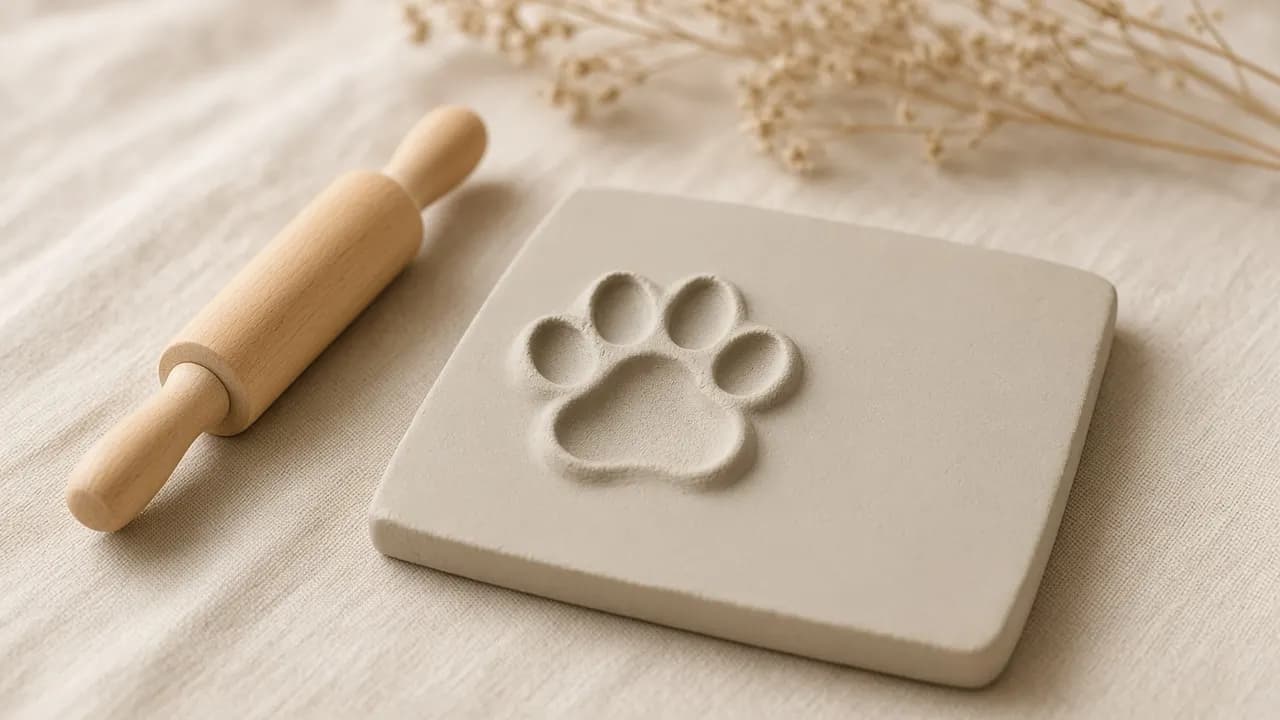
To make a clay paw print at home, roll pet-safe clay about half an inch thick, cut a circle, then hold your pet's leg above the wrist and press the paw straight down and straight up. Dry it slowly, seal it, and you have a keepsake crematories charge up to $76[1] to make.
By the Paw Print Keepsakes & Memorial Impressions editorial team · Updated September 24, 2026 · 5 min read · Sources
- Which clay to buy, and which recipe to avoid
- A clear method for dogs, cats and small pets
- Troubleshooting blurry, shallow or cracked prints
The short answer
What's the easiest way to make a clay paw print at home?
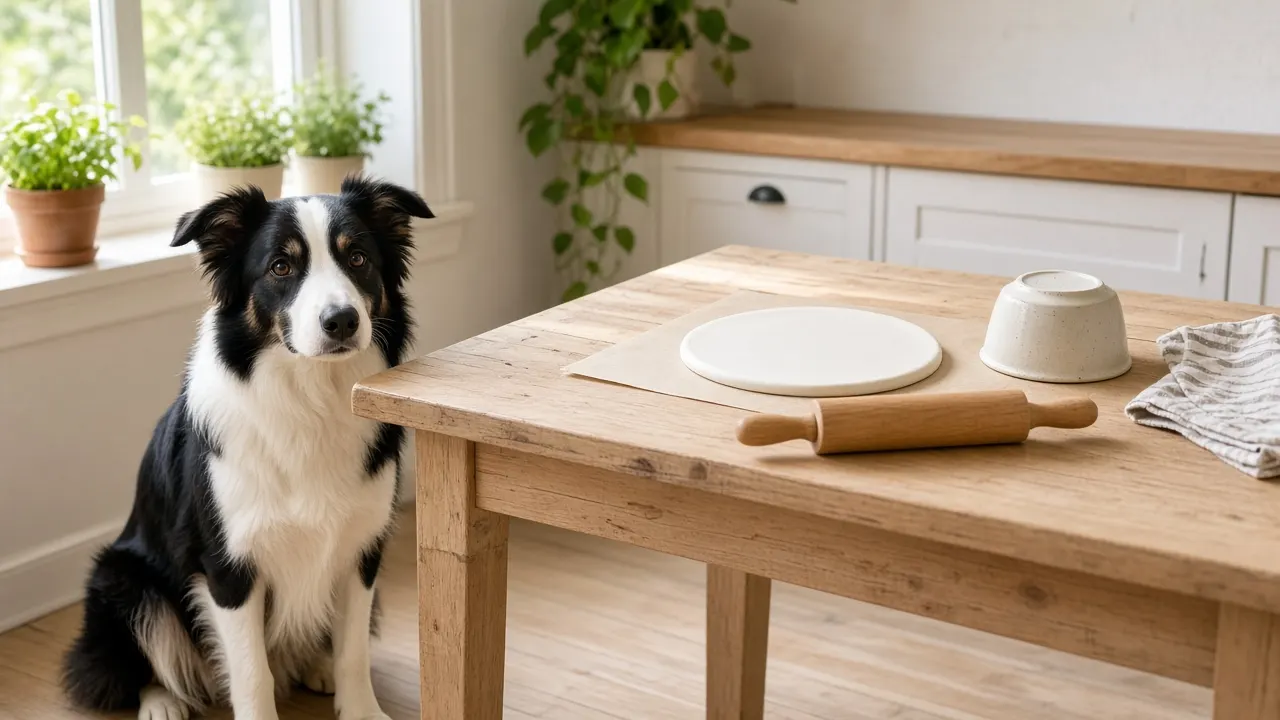
Use a pet paw print kit or a pack of air-dry or oven-bake clay, roll it to about half an inch (1 to 1.5 cm), and press your pet's paw into it while they're relaxed. Hold the leg, not the toes, press evenly for two or three seconds, and lift straight up. Most people need two or three tries, so start with enough clay to re-roll.
The whole thing takes about twenty minutes, plus a few days of drying. It costs little: at crematories the same keepsake is an add-on, typically $10[2] to $76, with a median of ~$32[3] by our estimate. Doing it at home means you choose a calm moment and can keep the clearest of several. The poll results show which worries other readers share most.
What worries you most about taking a print yourself?
Tap an answer to vote and see how others answered. Anonymous.
What you need
What clay and materials should you use?
There are three sensible choices, and one to avoid. The one to avoid is salt dough: the Merck Veterinary Manual's salt toxicosis page lists dough-salt mixtures among the causes of salt poisoning in pets. If your dog does eat some, call your vet or the ASPCA Animal Poison Control Center straight away.
| Clay | How it sets | Pros | Cons |
|---|---|---|---|
| Pet paw print kit clay | Air-dries in 2 to 4 days | Right softness, pre-measured, often includes a frame or ribbon | Limited clay for retries |
| Air-dry modelling clay | Air-dries in 2 to 4 days | Cheap, plenty for several tries | Can crack if dried too fast |
| Oven-bake polymer clay | Baked in a home oven | Tough once cured, crisp detail | Firmer to press; must bake carefully |
| Salt dough | Baked or air-dried | Cheap craft recipe | High salt is dangerous to dogs if licked or chewed: avoid |
You'll also need a rolling pin (or a smooth glass), baking paper, a small bowl or cookie cutter for the circle, a straw for a ribbon hole, blunt-tipped scissors, a damp cloth and a towel. Not sure which clay suits your pet's paw? The paw print kit chooser gives a recommendation in about thirty seconds.
Free tool
Paw print keepsake chooser
Match a print method to your pet's size, fur and the keepsake you want to keep.
Step by step
How do you press the paw into the clay?
- Soften and roll. Knead the clay in your hands for two or three minutes until it's warm and smooth. Roll it on baking paper to an even half-inch thickness. Thinner than that and a heavy dog will push right through.
- Cut the shape. Press an upturned bowl or large cutter into the clay and peel away the excess. Leave the offcuts wrapped; you may need them.
- Prepare the paw. Gently trim the long tufts between the pads so they don't fill the dips, and wipe the paw clean and dry.
- Position your pet. A lying-down pet is easiest. Bring the clay to the paw on a board or tray, rather than lifting the paw to the table.
- Press. Hold the leg just above the wrist. Lower the paw straight onto the clay and apply steady, even pressure for two or three seconds, rolling very slightly from back pad to toes for a big dog.
- Lift straight up. Any sideways movement smears the edges. If it's not clear, re-roll and try again.
- Finish. Push a straw through the top for a ribbon hole, and write the name and date with a toothpick while the clay is soft.
Our comparison of ink, clay and 3D casts explains why many people take an ink print at the same session, since it's the easiest format to copy into jewelry later.
Cats and small pets
Is it different for a cat, rabbit or small dog?
Yes. Light paws press shallow, so use softer clay rolled a little thinner, around a third of an inch, and press gently with the pet lying down. With cats, choose a sleepy, post-meal moment and keep the press short; squeezing the toes extends the claws. Rabbits and guinea pigs have furry soles, so the print shows the long shape of the foot rather than neat pads, which is lovely in its own way.
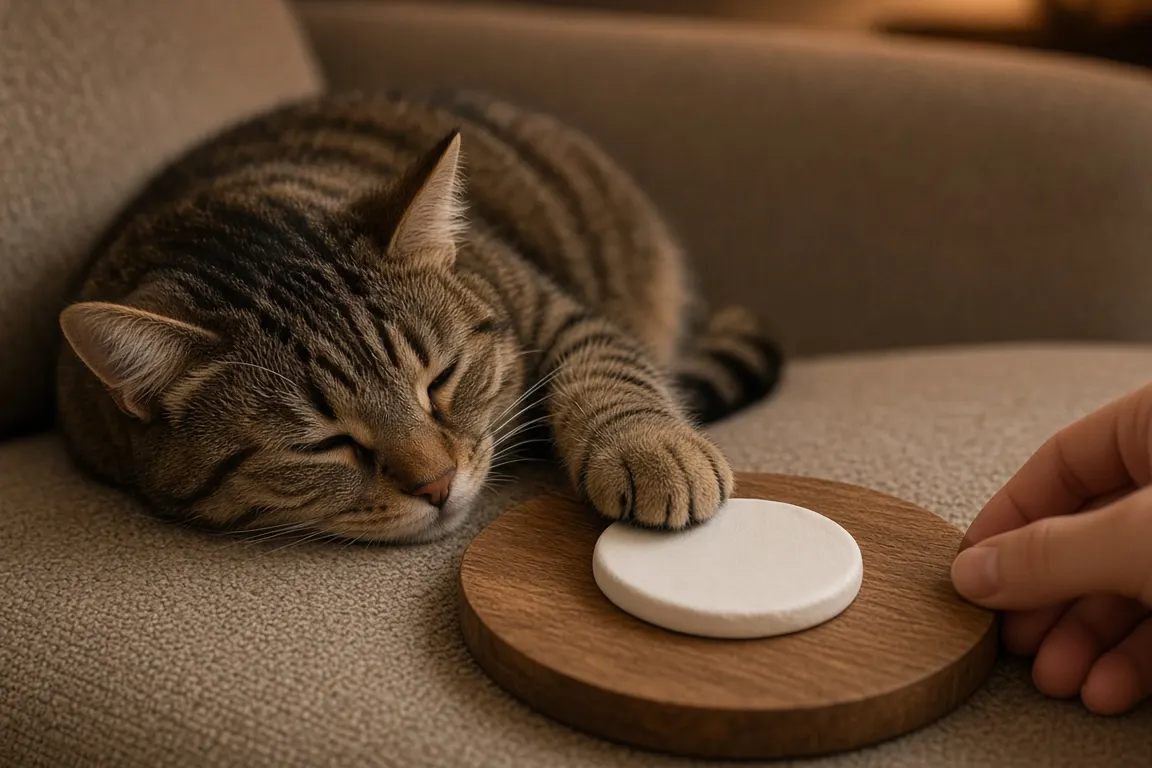
Dog owners are the biggest group, with 53%[4] of US households owning at least one according to the American Pet Products Association, but cats are close behind at 39%[5] of households, and their smaller paws need this gentler approach. For large and giant breeds, a bigger, thicker disc or a tray of foam may work better; see ink, clay and 3D casts compared.
Drying, baking, sealing
How do you dry and finish the print?
Air-dry clay: leave it flat on a wire rack in a cool room for two to four days, turning it once a day. Keep it away from radiators and sunny windows, which dry the surface too fast and cause cracks. Oven-bake clay: follow the pack instructions exactly, then let it cool slowly.
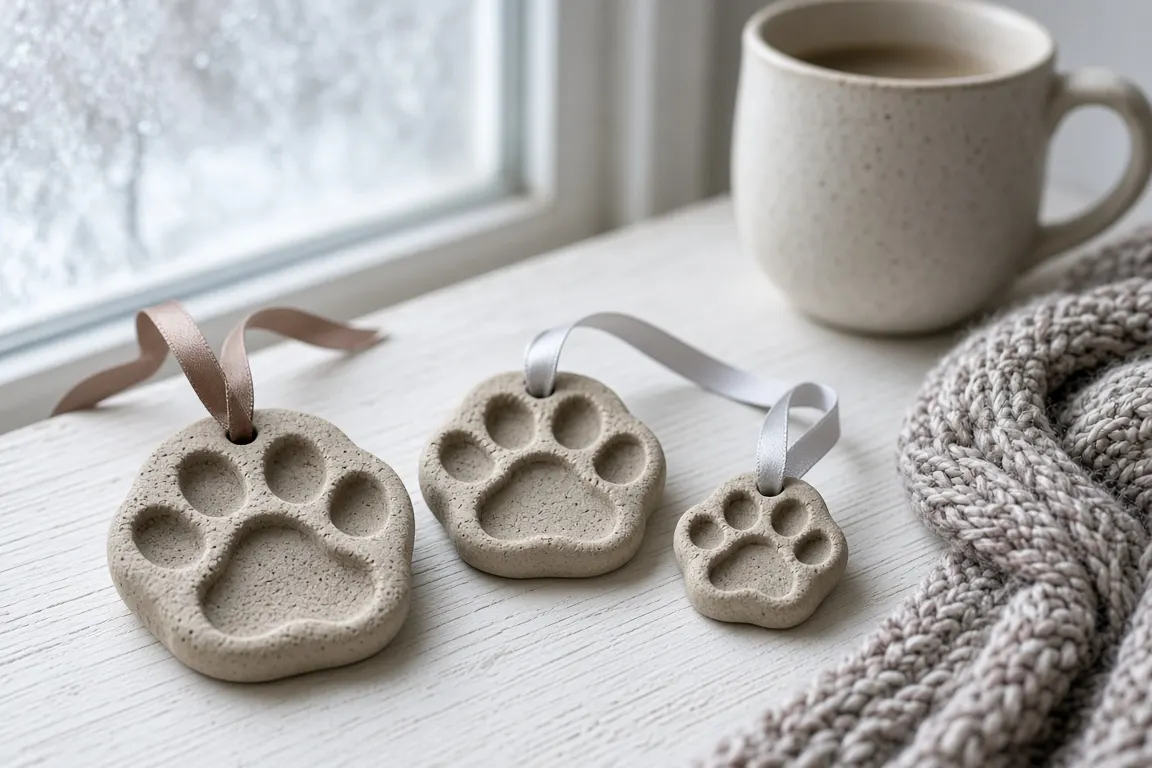
Once it's completely dry, brush on two thin coats of matte acrylic sealer. Paint the rim or add a pet's name in acrylic if you like, before sealing. Keep drying prints out of reach; dogs may try to chew them. For long-term care, humidity and repairs, see how to preserve a clay or ink paw print.
Fixing problems
Why didn't my clay paw print work, and how do I fix it?
- Blurry edges: the paw slid. Hold higher up the leg and lower it vertically.
- Too shallow: the clay was too firm or the pressure too light. Warm the clay longer and press a second more.
- Toes splayed flat: too much pressure. Ease off, especially with small dogs.
- Fur marks instead of pads: trim between the pads a little more.
- Cracks while drying: dried too fast. Cover loosely with a damp cloth for a few hours, then fill hairline cracks with softened clay.
- Pet won't cooperate: stop, try again tomorrow, or ask your vet team to help at a routine visit.
If you'd rather someone else took the print, crematories, vets and studio makers all do it. A Canadian studio, for example, charges from CA$155[6] for a handmade ceramic paw-print keepsake. Our services page explains every route, and the memorial budget planner helps if you're adding up a print, frame and other keepsakes.
The first press is practice. The one you keep is usually the third.
If children want to help, our guide to making a paw print with children suggests safe jobs for each age. And if you'd like us to find a local maker or vet who takes prints, send us a note. You can also browse our local pages to see who's nearby.

Reader polls
What would you choose?
Vote anonymously and see how other readers answered. The results are live counts from people who visit this site, so they show real opinions, not a scientific sample.
What worries you most about taking a print yourself?
Tap an answer to vote and see how others answered. Anonymous.
If you could keep one kind of print from your pet, which would it be?
Tap an answer to vote and see how others answered. Anonymous.
Which memorial feels most like your pet?
Tap an answer to vote and see how others answered. Anonymous.

Questions people ask
What kind of clay is safe for a pet paw print?
A clay sold in a pet paw print kit is the simplest choice, and ordinary non-toxic air-dry or oven-bake polymer clay also works. Wipe the paw clean straight after pressing. Avoid salt dough: its high salt content can make dogs seriously ill if they lick or chew the drying print.
How thick should the clay be for a paw print?
About half an inch (1 to 1.5 cm) for most dogs and a little thinner, around a third of an inch, for cats and small pets. Too thin and a heavy paw pushes through or the disc cracks; too thick and it takes much longer to dry evenly. Roll it on baking paper for an even surface.
How long does a clay paw print take to dry?
Air-dry clay usually needs two to four days, depending on thickness and humidity. Dry it flat in a cool room and turn it once a day. Oven-bake polymer clay sets in the oven in under an hour, following the pack's instructions. Seal either kind only once it's completely dry.
Can I make a clay paw print of a pet that has died?
Yes, especially within the first couple of hours, while the toes are still soft. Bring the clay to the paw on a board rather than lifting the leg, and press gently. Many people find ink or an inkless kit easier at this stage. Our guide to taking a print after a pet dies explains how.
Can I bake air-dry clay to speed it up?
It's not a good idea. Heat dries the surface much faster than the inside, which is the main cause of cracks. If you need a print that sets quickly, use oven-bake polymer clay instead and follow its instructions. Air-dry clay rewards patience and a cool room.
How do I add my pet's name to a clay paw print?
Write it with a toothpick or the end of a paintbrush while the clay is still soft, below or around the print. Alphabet stamps from a craft shop give neater letters. Alternatively, paint the name on in acrylic once the clay is dry, then seal over it.


Sources and our estimates
- [1] Final Gift charges $49 for ink paw prints, $76 for a clay or silver-clay paw print, $111 framed, and $133 framed with a fur clipping; a fur clipping alone costs $23. Final Gift Pet Memorial Center – Memorial Products, 2026.
- [2] Memorial add-ons at A Greener Place: $15 laser-engraved paw print, $10 clay paw impression, $10 nose print, $5 fur clipping. A Greener Place Pet Aquamation – Pricing, 2026.
- [3] Paw-print add-ons at US crematories have a median price of about $32, from $10 to $76. Our estimate: median of [$10 clay (AGP), $15 laser engraving (AGP), $49 ink (Final Gift), $76 clay (Final Gift)]. How we calculate.
- [4] 53% of US households own a dog, which is about 71 million households. American Pet Products Association (APPA) 2025 State of the Industry, 2025.
- [5] 39% of US households own a cat, which is about 53 million households. American Pet Products Association (APPA) 2025 State of the Industry, 2025.
- [6] Spawts, a Canadian studio, charges from CA$155 for a handmade ceramic paw-print keepsake and asks buyers to allow 3–4 weeks. Spawts – Ceramic keepsakes, 2026.
Get clay print kits and help near you
Tell us what you need and where you are. We'll reply by email with clear options and prices so you can decide in your own time.