Ink, clay or a 3D cast: what each paw print is really like to take
Ink is the fastest and most forgiving, clay gives you something to hold, and a 3D cast looks most like the real paw but takes the most care. If you only get one try, ink or inkless is the safest bet; if you have time, do clay as well, and consider a cast for a large dog.
By the Paw Print Keepsakes & Memorial Impressions editorial team · Updated September 24, 2026 · 5 min read · Sources
- Time, mess and difficulty for each method
- The mistakes that spoil prints, and how to avoid them
- What a professional 3D cast involves and costs
The short answer
Which paw print method is easiest to take?
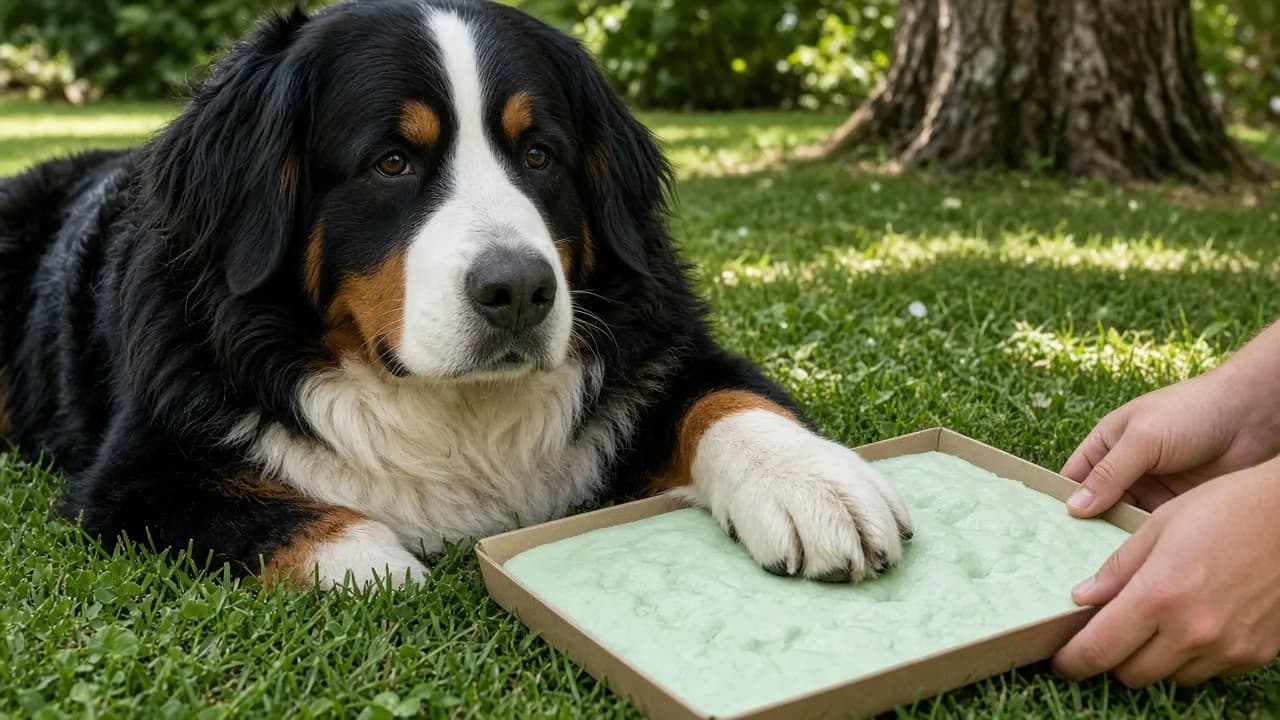
Ink and inkless prints are the easiest: a few seconds of contact, no special strength and nothing to set. Clay takes a little more practice because you need even pressure and a straight lift. A 3D cast is the most demanding, because the mold has to be taken carefully and then filled, but it gives the most lifelike result, especially for big dogs. The poll results show which method other readers prefer.
| Method | Contact time | Difficulty | Mess | Suits |
|---|---|---|---|---|
| Ink | 2 to 3 seconds | Easy | Some; wipe straight away | Short-furred paws, noses |
| Inkless | 2 to 3 seconds | Easiest | Almost none | Cats, fluffy or anxious pets |
| Clay | 3 to 5 seconds | Moderate | Low | Cats and dogs up to large size |
| Foam cast | A few seconds, then casting | Moderate | Plaster stage is messy | Medium to giant dogs |
| Gel cast | 1 to 2 minutes still | Harder | High | Calm pets, professional studios |
What worries you most about taking a print yourself?
Tap an answer to vote and see how others answered. Anonymous.
Ink
What is taking an ink print actually like?
You tape a sheet of heavy card to a hard surface, dab pet-safe ink onto the pads with the pad or roller from the kit, and press the paw down flat for a second or two. The whole thing takes less than a minute. The main risk is sliding: if the paw moves as it lands, the pads smear. Hold the leg just above the wrist, not the toes, and lower it straight down. If you're buying ink separately rather than in a kit, the "Conforms to ASTM D-4236" label means it was reviewed for chronic hazards to people under the Consumer Product Safety Commission's art materials rules; an ink made for pets is still the safer bet for a paw that will be licked.
Inkless kits work the same way, except you wipe the paw with a treated cloth and press it onto special paper. The print appears as the chemicals react, and nothing colored is left on the fur. For cats, rabbits and any pet who hates having wet paws, that alone makes it the gentler choice.
Crematories and vets use ink routinely, so it's also the cheapest print to have done for you: one Northeast US cremation network charges $49[1] for ink prints. By our estimate the median US paw-print add-on is ~$32[2].
Clay
What makes a clay print harder than it looks?
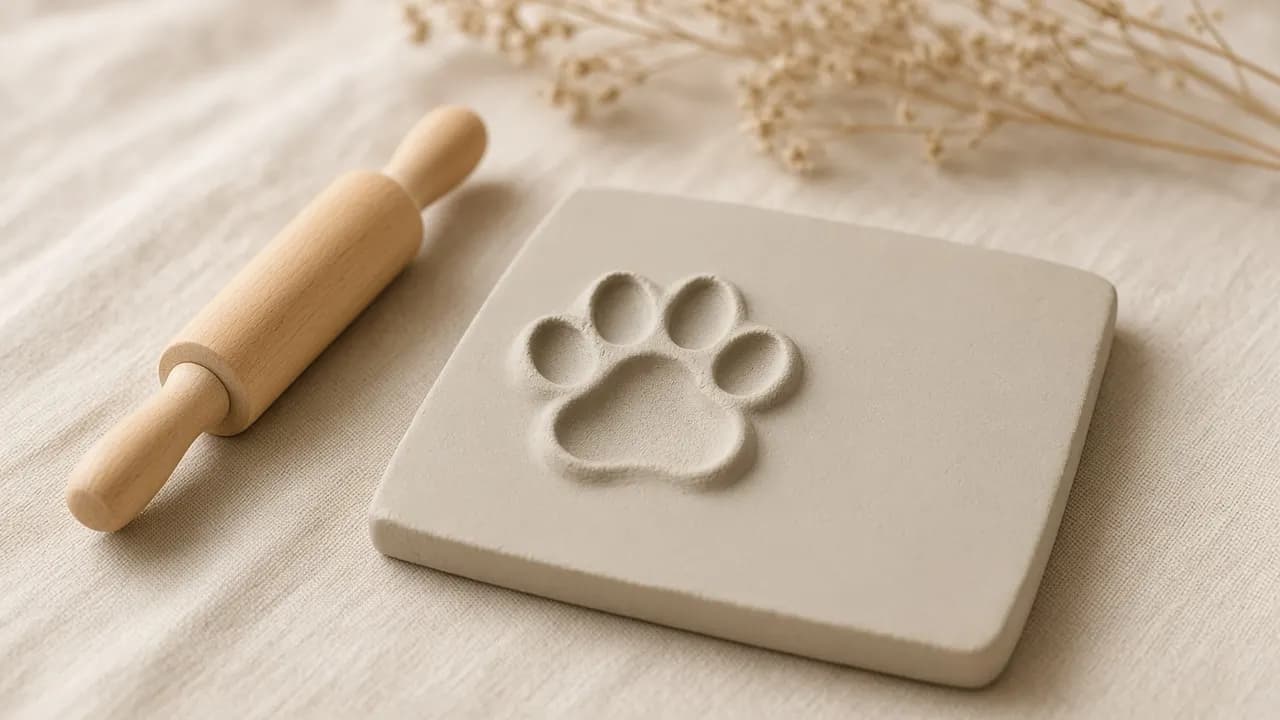
Clay forgives less. Too little pressure gives a faint dent; too much pushes the toes apart and blurs the pads. The clay also needs to be the right softness: warm it in your hands for a few minutes, roll it smooth and press on a firm table rather than a cushion. Most people get a good one on the second or third try, so buy a kit with enough clay for several attempts.
Furry feet are the other challenge. Long fur between the pads fills the dips, so trim it gently with blunt scissors first. Cats need a light, quick press, as squeezing their toes pushes the claws out. Our full walk-through of how to make a clay paw print at home covers drying, sealing and fixing mistakes.
Clay is also a routine crematory add-on. One Arizona provider charges $10[3] for a clay paw impression; elsewhere clay prints taken for you cost up to $76[1].
Free tool
Paw print keepsake chooser
Match a print method to your pet's size, fur and the keepsake you want to keep.
3D casting
How does a 3D paw cast work?
A cast has two stages. First, a mold captures the paw's shape. Then the mold is filled with plaster, casting stone or resin to make a solid copy. The mold is the part that needs your pet; the filling can happen days later.
- Impression foam is a soft block the paw sinks into. It's quick and suits big dogs, whose weight helps the paw sink evenly. The foam can only be used once, so line the paw up carefully before you press.
- Molding gel (often alginate) is mixed with water and the paw is held in it for a minute or two while it sets. It captures more detail, including fur texture, but your pet has to keep still, which is why studios and experienced vets usually do it.
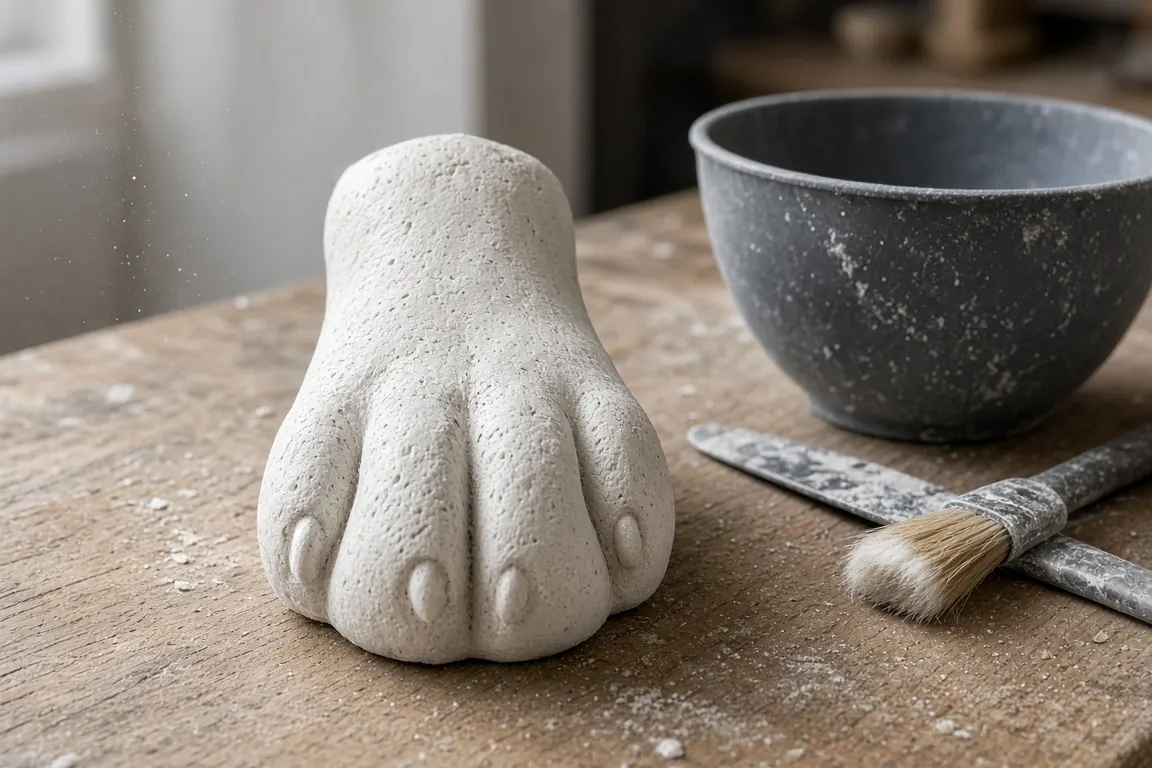
Professional casts are priced by size. In the UK, one body-casting studio charges from £120[4] to cast a small dog's paw pads in resin, with medium and large breeds costing about a fifth and a third more. A cast can later be reproduced in bronze, or a jeweler can use it to make a raised charm; one US maker charges $143[5] for a custom sterling silver paw-print charm before the chain. Our services page explains who takes molds and who finishes them, and our list of paw print keepsake ideas shows what else a cast can become.
By pet
Which method suits your pet?
Size and fur decide most of it. Dogs are the most common subject simply because there are so many: 53%[6] of US households own a dog, against 39%[7] with a cat, according to the American Pet Products Association. Big dogs press beautifully into foam or clay because their pads are large and flat. Small dogs and cats print more clearly in ink or inkless, because their paws are light and their pads small.
- Large and giant dogs: foam cast or a large clay tray, plus an ink print for copies.
- Small dogs and cats: inkless or ink first, then clay if they're relaxed.
- Rabbits and guinea pigs: very soft clay shows the long foot shape; ink gives a feathery outline.
- Birds: inkless paper they can walk across.
The paw print kit chooser turns those rules into a quick recommendation for your pet. If your pet is already very old or unwell, check our print window timing guide first, because it changes which methods are realistic.
Doing more than one
Should you take more than one kind of print?
If you can, yes. The methods complement each other. An ink print is the flat image that engravers and jewelers need; clay or a cast is the thing you hold. Taking both in one session adds only a few minutes, and many vets and crematories will do both if asked. Personal touches matter to many families, with 51% of pet owners in one report interested in personalized memorials[8].
Plan the order: ink or inkless first while the paw is clean and dry, then wipe the paw, then clay or foam. Doing clay first leaves residue that smudges ink. If you're adding up a print, a cast and a pendant, the memorial budget planner keeps the total in view. For how each format holds up over the years, see our comparison of clay, ink, metal and glass prints.
Ink first, clay second. A clean paw gives the sharpest flat print, and the flat print is the one you'll copy most.
If you'd rather have a professional take a cast or print, tell us where you are and we'll reply by email with local options. Our local pages also show what's available by city.

Reader polls
What would you choose?
Vote anonymously and see how other readers answered. The results are live counts from people who visit this site, so they show real opinions, not a scientific sample.
What worries you most about taking a print yourself?
Tap an answer to vote and see how others answered. Anonymous.
If you could keep one kind of print from your pet, which would it be?
Tap an answer to vote and see how others answered. Anonymous.
Which memorial feels most like your pet?
Tap an answer to vote and see how others answered. Anonymous.

Questions people ask
Which is better for a paw print, ink or clay?
They do different jobs. Ink gives a crisp, flat image that's easy to frame and to copy into jewelry, engravings or tattoos. Clay gives a 3D keepsake you can hold, but it's harder to get right and can't be copied as easily. If you can take both, do ink first while the paw is clean, then clay.
How long does a 3D paw cast take?
The mold itself takes seconds in impression foam or a minute or two in molding gel. Filling it with plaster and letting it set takes a few hours, and curing fully can take a day or more. Professional studios finishing in resin or bronze usually take weeks, so ask for a timeline when you book.
Can you take a 3D cast of a cat's paw?
Yes, but it's harder than with a dog. Cat paws are small and light, so they don't sink evenly into foam, and most cats won't keep still in molding gel. A professional, or a vet who has done it before, gives you a much better chance. For most cats, an inkless print plus a gentle clay press is easier.
Why did my clay paw print come out blurry?
Usually because the paw moved as it pressed or lifted, the pressure was uneven, or fur between the pads filled the gaps. Warm and smooth the clay, trim the fur between the pads, hold the leg above the wrist and press straight down and straight up. Re-roll the clay and try again.
Is ink safe if my pet licks their paw afterwards?
Use ink sold as pet-safe or non-toxic, and wipe the paw clean with a damp cloth as soon as the print is done. Dry between the toes too. Inkless kits avoid the worry completely, because the color appears on the paper rather than on the fur, which is why they're often recommended for cats.


Sources and our estimates
- [1] Final Gift charges $49 for ink paw prints, $76 for a clay or silver-clay paw print, $111 framed, and $133 framed with a fur clipping; a fur clipping alone costs $23. Final Gift Pet Memorial Center – Memorial Products, 2026.
- [2] Paw-print add-ons at US crematories have a median price of about $32, from $10 to $76. Our estimate: median of [$10 clay (AGP), $15 laser engraving (AGP), $49 ink (Final Gift), $76 clay (Final Gift)]. How we calculate.
- [3] Memorial add-ons at A Greener Place: $15 laser-engraved paw print, $10 clay paw impression, $10 nose print, $5 fur clipping. A Greener Place Pet Aquamation – Pricing, 2026.
- [4] Brighton Body Casting in the UK charges from about £120 to cast a small dog's paw pads in resin; medium and large breeds cost about 1/5 and 1/3 more. Brighton Body Casting – Pets, 2026.
- [5] A custom sterling silver actual-paw-print charm costs $143 before the chain (about $59–$79 for silver) and takes about 2 weeks to make. String of Jewels – Actual paw print necklace, 2026.
- [6] 53% of US households own a dog, which is about 71 million households. American Pet Products Association (APPA) 2025 State of the Industry, 2025.
- [7] 39% of US households own a cat, which is about 53 million households. American Pet Products Association (APPA) 2025 State of the Industry, 2025.
- [8] Astute Analytica reports 51% of pet owners are interested in personalized memorials and 70% consider memorialization significant. Astute Analytica via GlobeNewswire — Global Pet Preservation Services Market to Hit USD 112.7 Million by 2032 (Apr 2, 2024), 2024.
Get print and casting options near you
Tell us what you need and where you are. We'll reply by email with clear options and prices so you can decide in your own time.